
Playbook: Expanding from Support to Strategic Communities
# Community
# GTM Strategy
# Format: Playbooks
A guide to moving beyond transactional forums into programs that drive innovation, advocacy, learning, and long-term business value.
December 5, 2025 · Last updated on March 3, 2026
Bill Johnston

Joshua Zerkel
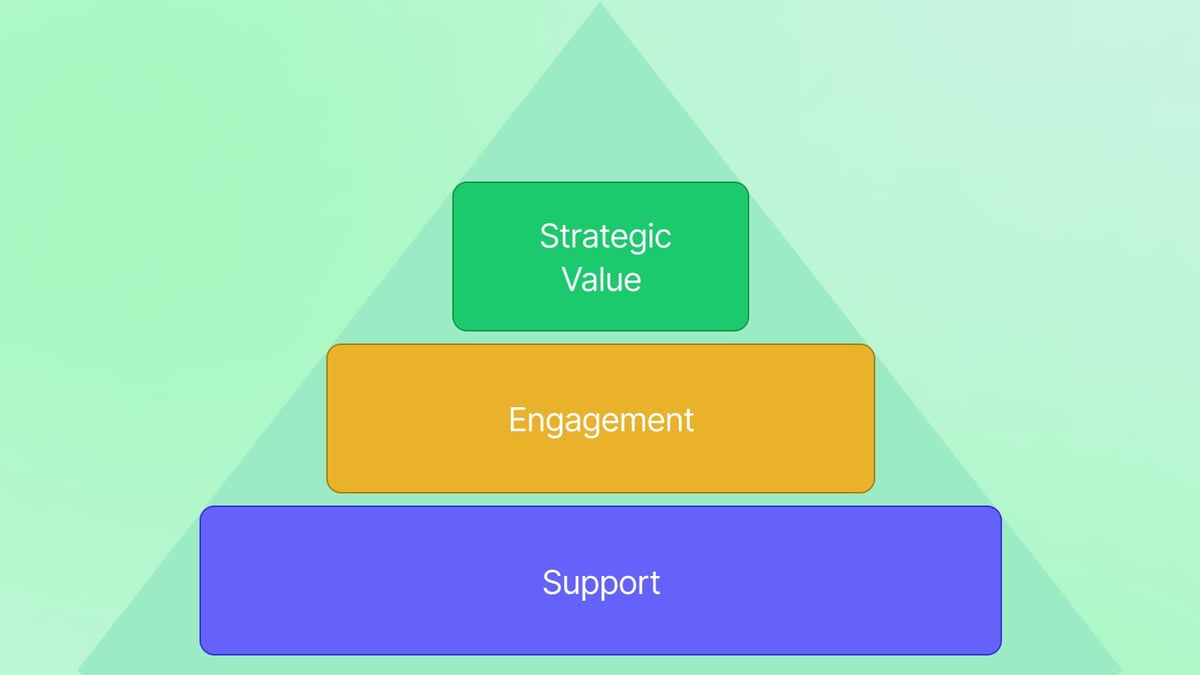
Many community programs begin with support. It is often the first and most visible use case. Members ask questions, solve problems, and share solutions. Companies benefit from reduced ticket volume and more efficient knowledge sharing. Support communities are valuable and necessary, but they represent only a fraction of what community can offer.
During Executive Insights with Gradual, strategist Bill Johnston explained that some of the strongest opportunities for community emerge far beyond support. When companies treat community as a strategic function rather than a troubleshooting channel, they unlock programs that influence innovation, product direction, customer learning, and brand trust.
This playbook shares how to expand from support into higher value programs that create long-term impact. It is designed for teams that want to deepen relationships, elevate customer insight, and bring more strategic value into their organizations.
Understand the limits of support-only communities
Support is often a natural starting point, but it creates a narrow definition of community if it becomes the only focus. Support-driven spaces usually prioritize speed and accuracy. They reward short answers rather than deeper conversation. They center product issues more than professional growth or strategic insight.
Bill shared that many companies stop here because it feels familiar and measurable. Support communities offer clear metrics and a direct connection to cost savings. Yet they often overlook larger opportunities that come from relationship building, expert exchange, and long-term customer connection.
The challenge is not that support is unimportant. The challenge is that support alone cannot build the kind of community that influences product, strategy, or market understanding.
Identify the strategic opportunities beyond support
Bill described several areas where community creates value that goes far beyond technical troubleshooting. These opportunities are not add-ons to support. They represent a broader definition of what community can accomplish for both members and the business.
The most impactful areas include:
Innovation and co-creation
Members often see the future of a product or industry sooner than internal teams. When companies create space for this insight, they gain ideas that can shape roadmaps, scenarios, and new offerings. Co-creation can take many forms, including idea forums, lead user groups, and future vision workshops.
Product feedback and insight
Feedback programs go deeper than support. They allow members to share challenges, test prototypes, and offer insight that can shorten product learning cycles.
Peer learning and professional development
Communities thrive when members help each other build skills, explore challenges, and develop their careers. Peer learning builds trust and long-term loyalty.
Customer advocacy and leadership
Recognition programs can evolve into peer-driven networks where members share expertise, support one another, and become visible ambassadors for the brand. Bill noted that these groups often need connection and development just as much as recognition.
Executive and strategic engagement
Leaders often want thoughtful conversation, not high volume discussion. Spaces that encourage strategic insight and cross-functional exchange can support deeper relationships with influential customers.
These areas expand community from a transactional function into a strategic asset.
Let your North Star guide your expansion
Your North Star is the central purpose that sits at the intersection of customer needs and business goals. It helps determine where you should expand and where you should not.
For example:
- If your North Star focuses on customer success and adoption, consider adding peer learning programs or onboarding cohorts.
- If your North Star emphasizes innovation, consider expert groups, product roundtables, or co-creation workshops.
- If your North Star focuses on market insight, introduce executive conversations or cross-functional roundtables.
Expansion becomes strategic when it grows from a clear purpose rather than a desire to add more activity.
Start with one or two high potential programs
Bill recommends using small and intentional investments to explore new areas. Rather than launching several initiatives at once, choose one or two programs that support your North Star and provide room for learning.
Some examples include:
- A quarterly insights roundtable with advanced practitioners
- A small peer circle pilot for influential customers
- A co-creation session focused on future scenarios
- A feedback panel with lead users
- A curated set of events that encourage expert-to-expert exchange
These types of programs build depth and trust, which create new forms of value that cannot be captured in support forums.
Shift from answering questions to creating engagement surfaces
Support communities focus on providing answers. Strategic communities focus on creating surfaces where members can engage, contribute, and learn from one another.
Think about:
- Guided topics that spark deeper discussion
- Structured prompts that invite experience sharing
- Events that connect people with peers, creators, or partners
- Spaces where members can teach, present, or collaborate
- Curated groups based on similar skills or goals
Communities become more valuable when members move from passive participation to active contribution.
Elevate trusted voices within the community
Every community has people who bring energy, insight, and leadership. These individuals often emerge naturally in support settings, but their influence becomes even more powerful in strategic programs.
Consider how to:
- Invite them to participate in product conversations
- Offer opportunities to mentor or support others
- Recognize their impact in visible but authentic ways
- Create channels where they can lead discussions
- Give them early visibility into product or industry direction
Bill referenced programs like Microsoft MVP and Salesforce MVP as examples that began with recognition and later expanded into deeper leadership and relationship building. A similar mindset can help any community mature into a more strategic asset.
Bring cross-functional partners into the process
Strategic community programs often require input from marketing, product, customer success, and leadership teams. Collaboration strengthens the impact of each program and helps internal partners see community as a valuable contributor rather than a separate function.
Consider working with cross-functional teams on:
- Co-creation sessions
- Customer advisory activities
- Event content and strategy
- Feedback cycles and roadmap planning
- Market research and trend identification
When these relationships mature, community insight flows more easily into the business.
Use signals of depth to measure strategic progress
Support communities measure value through efficiency. Strategic communities measure value through depth, connection, and impact.
Strategic signals include:
- Quality of insight from member discussions
- Participation in expert or leadership programs
- Cross-functional engagement in community activities
- Depth of feedback collected during co-creation
- Growth of member-led contributions
- Influence on product and customer strategy
These signals show whether your programs create the kind of long-term value that support forums cannot achieve on their own.
Key takeaways
- Support is a strong foundation but should not define the full scope of community.
- Strategic communities expand into innovation, learning, advocacy, and insight.
- Your North Star determines which areas to invest in first.
- Start with one or two high potential programs that you can test and refine.
- Create surfaces for deeper engagement instead of focusing only on answers.
- Elevate trusted members into leadership and collaboration opportunities.
- Measure depth, insight, and cross-functional influence rather than efficiency alone.
Frequently asked questions
How do I know if my community is ready to expand beyond support?
Look for signs of active peer exchange, recurring expert voices, and interest in deeper conversation.
What is the best place to start?
Begin with a single program that supports your North Star and that you can learn from without heavy resourcing.
Do strategic programs replace support?
No. They add value on top of support and help the community evolve into a more holistic and strategic asset.
- ▶️ Watch the full replay from our Executive Insights webinar
- Learn more and get in touch with Bill at his Substack
Like
Comments (0)
Popular

Dive in
Related
Resource
Expanding From Support Communities to Strategic Programs That Drive Impact
By Joshua Zerkel • Dec 3rd, 2025 • Views 30
Resource
Playbook: Designing Clear Orientation in Online Communities
By Brittney Aston • Apr 6th, 2026 • Views 48
Resource
Playbook: Building Psychological Safety in Communities
By Brittney Aston • Apr 21st, 2026 • Views 33
Resource
Playbook: Designing Clear Participation Paths in Communities
By Brittney Aston • Apr 13th, 2026 • Views 47
Resource
Expanding From Support Communities to Strategic Programs That Drive Impact
By Joshua Zerkel • Dec 3rd, 2025 • Views 30
Resource
Playbook: Building Psychological Safety in Communities
By Brittney Aston • Apr 21st, 2026 • Views 33
Resource
Playbook: Designing Clear Participation Paths in Communities
By Brittney Aston • Apr 13th, 2026 • Views 47
Resource
Playbook: Designing Clear Orientation in Online Communities
By Brittney Aston • Apr 6th, 2026 • Views 48