
Gradual Community
+00:00 GMT

Playbook: How to Build a Focused Community Strategy That Delivers Impact
Playbook: How to Build a Focused Community Strategy That Delivers Impact
# Theme: Community Building & DevRel
# Theme: GTM Strategy & Trends
# Theme: Leadership & Executive Perspectives
# Format: Best Practices & Playbooks
# Challenge: Cross-Functional Alignment

A practical, essentialist approach to designing community programs that align with business goals and customer needs.

December 5, 2025
Bill Johnston
Bill Johnston
Joshua Zerkel
Joshua Zerkel
Playbook: How to Build a Focused Community Strategy That Delivers Impact
Community work has expanded dramatically in recent years. New tools, rising expectations, and growing cross-functional pressure often leave teams stretched thin. It can feel like community needs to be everywhere at once. Supporting product adoption, fueling content, driving events, generating insights, and building advocacy can all compete for attention.
Real impact comes from doing the right things with clarity and intention. During Executive Insights with Gradual, community strategist Bill Johnston offered a grounded and practical way to create strategy that stays focused, meaningful, and aligned with both business goals and customer needs. This playbook translates his essentialist approach into a step-by-step guide that you can use to sharpen or redesign your community strategy.

Start with a simple and flexible vision

A focused strategy begins with a vision that gives direction without locking you into a fixed plan. Bill describes this early vision as a hypothesis. It is meant to evolve as you learn from your members and from the business.
A strong early vision captures three points:
  1. Who the community is meant to serve
  1. What it will help those people achieve
  1. How it will create value for the business
The goal is not perfection. The goal is clarity. Bill reminded us that the first version of your vision will likely be inaccurate, but it provides a valuable starting point.

Align community goals with business priorities

Once a vision is drafted, the next step is connecting it to business goals. Community has the greatest impact when it contributes to the priorities leaders already care about. These may include customer learning, product adoption, retention, market insight, brand trust, or innovation.
Map your community vision to these areas and identify where there is genuine alignment. Avoid stretching the strategy to cover everything. Focus brings credibility. When leaders see a clear connection between community work and the outcomes they value, support grows.

Understand what your customers actually need

Community strategy grows stronger when it is informed by real customer insight. Bill encourages leaders to speak directly with members, prospects, and anyone who represents the audience they want to serve. The goal is not to ask what they want from a community. The goal is to understand what challenges they are facing and where they already gather for support and connection.
These conversations often challenge assumptions. They show what members find valuable and what they do not. When you combine this insight with clear business priorities, you begin to see the shape of a focused and meaningful strategy.

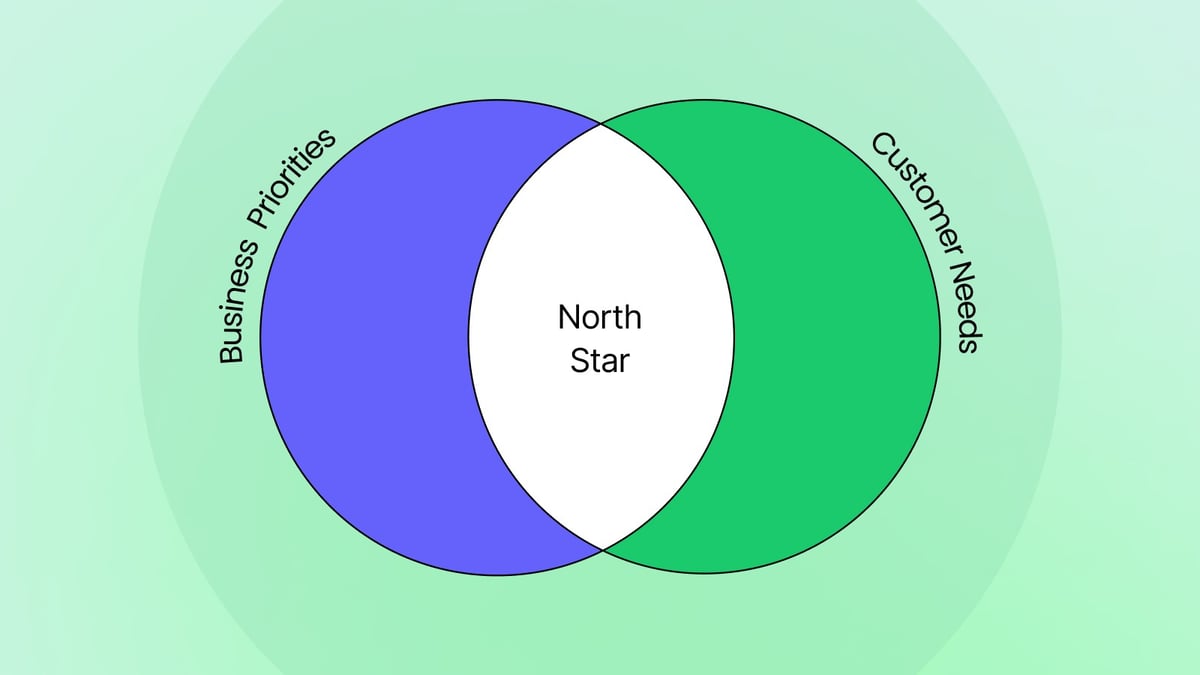
Identify your North Star at the intersection

Your North Star sits at the point where business goals and customer needs overlap. It becomes the guiding force that helps the team decide where to invest time and energy.
A North Star might focus on:
  • Strengthening customer expertise and product adoption
  • Connecting cross-functional leaders for shared learning and insight
  • Supporting practitioners with peer-driven solutions
  • Gathering customer feedback that shapes product direction
The North Star keeps teams aligned and prevents strategy drift. If a new idea does not support it, it is not essential.

Turn your vision into small and testable bets

Once the North Star is clear, Bill recommends using small and testable investments to learn what works. These early bets allow your team to gather insight, show early value, and avoid overcommitting resources.
A testable bet:
  • Has a clear purpose
  • Serves a specific audience
  • Can launch with minimal resources
  • Provides insight that you can measure and apply
Examples include:
  • A short-term peer circle pilot
  • A focused feedback loop with lead users
  • A small event series with limited capacity
  • A weekly expert discussion thread
Start with a few experiments and learn from each one. The goal is not to scale quickly. The goal is to understand what creates real value.

Avoid choosing technology too early

One of the most common mistakes in community building is choosing a platform before defining purpose. Bill has seen companies select technology because a leader preferred it, because a competitor used it, or simply because they wanted to launch quickly.
Technology should follow strategy. Once you know what you are trying to achieve, it becomes much easier to choose tools that support your programs. This prevents wasted effort and helps the platform become an accelerator rather than a barrier.

Measure progress with long-term perspective

Community value builds gradually. It often appears in patterns, stories, and signals long before it appears in quantitative metrics. This does not mean you should avoid measurement. It means choosing metrics that reflect relationship-driven progress.
Focus measurement on indicators such as:
  • Participation in meaningful conversation
  • Quality of peer exchange
  • Depth and relevance of product feedback
  • Engagement with core programs
  • Signs of customer learning and adoption
  • Member-led contributions
Bill noted that community often moves at a different rhythm than the rest of the business. Quarter-by-quarter planning cycles move faster than the natural pace of relationship building. It is important to set expectations accordingly.

Keep your strategy simple, adaptive, and grounded

The essentialist approach is practical rather than rigid. Its purpose is to create focus. This approach helps teams avoid scattered activity and stay connected to what matters most.
When you stay aligned to your North Star, listen actively to customer needs, and invest through small and intentional bets, impact grows naturally. Bill expressed this clearly: “You create enduring value if you attend to it.”

Key takeaways

  • Strong community strategy begins with a flexible and directional vision.
  • Alignment with business priorities strengthens clarity and credibility.
  • Customer insight shapes programs that deliver meaningful value.
  • Your North Star lives at the intersection of business goals and customer needs.
  • Start with small and testable investments to learn what works.
  • Choose technology after clarifying purpose.
  • Measure progress through signals that reflect long-term relationship value.

Frequently asked questions

What defines a focused community strategy? A strategy that concentrates on a few essential programs that support business goals and meet customer needs.
How do I identify my North Star? Find the overlap between what the business values and what members need in order to succeed.
Why should technology decisions come last? Tools are most effective when they support a clear purpose. Choosing them too early often causes misalignment.
Comments (0)
Popular
avatar

Table Of Contents
Dive in

Related

video
Event Replay: Executive Insights with Gradual: Essential Community Strategy for Focused Impact
By Bill Johnston • Nov 12th, 2025 Views 19
Resource
Playbook: How to Track Revenue Signals from Community
By Anthony DeShazor • Oct 1st, 2025 Views 21
Resource
Playbook: How Executives Can Build Strategic Value Through Community
By Brian Oblinger • Dec 5th, 2025 Views 5
Resource
Playbook: Turning Community Insights into Business Impact
By Brian Oblinger • Dec 5th, 2025 Views 6
Resource
Playbook: How Executives Can Build Strategic Value Through Community
By Brian Oblinger • Dec 5th, 2025 Views 5
Resource
Playbook: Turning Community Insights into Business Impact
By Brian Oblinger • Dec 5th, 2025 Views 6
Resource
Playbook: How to Track Revenue Signals from Community
By Anthony DeShazor • Oct 1st, 2025 Views 21
© 2025 Gradual Community
Privacy Policy