Event Replay: Executive Insights with Gradual: Essential Community Strategy for Focused Impact
speakers

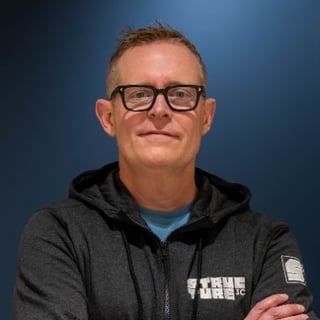
At Structure3C, Bill has spent more than a decade helping some of the world’s most innovative companies (Autodesk, IBM, Salesforce, Siemens, and more) design and scale community strategies that deliver measurable business results. Bill’s practice is grounded in both deep, hands-on experience across industries and a clear strategic framework that prioritizes focus, alignment, and impact over activity for activity’s sake. In addition to his role leading Structure3C, Bill is also a board member of Atma Connect, and global non-profit creating public good through social technologies.
LinkedIn https://www.linkedin.com/in/billj/ Substack https://structure3c.substack.com/ Website https://www.structure3c.com/

Josh Zerkel is Head of Marketing & Community-Led Growth at Gradual. A recognized leader in community strategy, he has built and scaled programs at Asana, Evernote, HeyGen, and CBS News that have driven millions in pipeline, global engagement, and cross-functional impact. He’s the author of The Community Code, and a trusted advisor to startups and enterprise teams building community-powered growth engines.
SUMMARY
Join Bill Johnston, community strategist and founder of Structure3C, for a strategic conversation on how to make community an essential business function that creates value across your organization.
Too often, companies treat community as something “extra” that sits outside core operations. In reality, a well-designed community can influence revenue, innovation, customer success, and brand perception. The key isn’t doing everything, it’s focusing on the high-leverage opportunities that deliver real impact.
In this Executive Insights session, you’ll explore:
- Why community is essential: How it creates value across the customer lifecycle and supports multiple business functions
- The essentialist approach: How to cut low-value activity and focus on what matters most
- Real-world application: Examples of organizations that moved from scattershot tactics to focused strategies and the results they achieved
This is a 30-minute, strategic exchange designed to sharpen your thinking and expand your perspective.
TRANSCRIPT
00:00:01:00 - 00:00:34:12 Joshua Zerkel Hello, everybody. Welcome to today's webinar. My name is Josh Zerkel. I am head of Marketing and community here at gradual. I see some familiar faces joining us. Welcome. Welcome to Executive Insights with gradual end today's topic. Essential community strategy for focused impact. I'm excited for this one. Folks I think it's going to be great. In case you are new to gradual, it is the all in one engagement and community platform to share in connection into lasting business impact and grow engagement beyond your product.
00:00:34:14 - 00:00:57:08 Joshua Zerkel Before I introduce our guest expert, quick note, this session is being recorded and we'll send it out to everyone who registered after the webinar concludes. We'll also put it on the gradual [email protected]. And please, as we are progressing through our chat today. Feel free to drop your questions or comments. Your thoughts in the Q&A or the chat, and we will get to as many as we can.
00:00:57:10 - 00:01:19:24 Joshua Zerkel This is designed to be interactive so please participate. We definitely want to hear from you. After our session ends, you will still be able to ask questions and share your thoughts in the forum AMA, which we will talk about a bit more later on and we will share that link. So you have easy access to it. Now without further ado, I would like to introduce you to our speaker, Bill Johnston, a personal friend and a mentor of mine.
00:01:19:25 - 00:01:48:00 Joshua Zerkel Welcome, Bill at Structure3C. Bill has spent more than a decade helping some of the world's most innovative companies, including places like Autodesk, IBM, Salesforce, Siemens and many more to design and scale community strategies that deliver measurable business results. Bill's practice is grounded in both deep, hands on experience across industries and a clear strategic framework that prioritizes focus, alignment, and impact over activity for activity sake.
00:01:48:02 - 00:01:58:12 Joshua Zerkel In addition to his role leading Structure3C, Bill is also a board member of Atma connect, a global nonprofit creating a public good through social tech. Welcome, Bill.
00:01:58:15 - 00:02:02:01 Bill Johnston Thank you for having me, Josh. I am very excited to be here.
00:02:02:04 - 00:02:20:15 Joshua Zerkel I'm happy to have you. So for those of you that don't know, Bill here is like OG community Builder. He's been in the space for quite a long time. You can see, you know, some of the names of the companies that he's built communities within for. And so he's seen community strategy at a corporate level, inside and out.
00:02:20:17 - 00:02:27:05 Joshua Zerkel So, Bill, maybe we can just start by your thoughts on how community can play a role in a corporate strategy.
00:02:27:08 - 00:03:03:06 Bill Johnston Absolutely. So, you know, to to start the conversation, I will say, an important factor in how I think about community specifically. And, you know, online, the internet generally is I was I'm Gen X. So I was the the generation that sort of saw the commercial internet come into being. Right. And so in my early career, like, people were just hyperventilating about how the internet would be just fine.
00:03:03:06 - 00:03:46:26 Bill Johnston And in a lot of cases, transferring. Right. So I got to see pre-internet and post internet, which, really helped me kind of ground my thinking in how businesses navigate transformation. I guess, first and foremost, and I think the other important factor here is, I'm actually a trained designer, so I have a fine arts degree and, and design and that process, the the design process and what evolved into the what was called information architecture and eventually became, you know, UX design still plays a huge role in my practice in how I think about things.
00:03:46:26 - 00:04:34:13 Bill Johnston And so from a strategy perspective, you know, inherently, all of my thinking and decision making really kind of defaults back to design strategy and to those early experiences with, you know, thinking about how the network, right, will will play a role in the possibilities for business. And so to answer the question specifically, eventually, right. I think that community can play and should and in some cases does play a huge role in corporate strategy because it taps into that implicit, sometimes oftentimes unrealized network of relationships that businesses create.
00:04:34:16 - 00:05:10:23 Bill Johnston Right. These are customers. These are prospects. These are definitely employees. In some cases, they're partners. But if you think about the web of connections that a business has, right. Community in the sense of like a capital C community strategy helps you strategically light up the most valuable connections. Right? And I think, from a strategy perspective, it really comes down to that network of relationships and the value of those relationships over time.
00:05:11:00 - 00:05:18:01 Bill Johnston That's the most central and valuable part, I would argue, of of what we do.
00:05:18:04 - 00:05:40:13 Joshua Zerkel I think so, too. It's funny that you mention that because I often frame community as relationships at scale and I had a conversation yesterday, yesterday with a group of founders, and one of them was like, okay, I want to get an intern to manage my community. And I understand the impetus. But at the same time, when you really think about it, your community are your most engaged customers and prospects.
00:05:40:13 - 00:06:00:02 Joshua Zerkel These are people who are volunteering their time to spend time in your community. That is how engaged they are. And so to me, that's one of the most valuable assets that you as a business can possibly have. Those are critical relationships. And so I'm often mystified at how it's not looked at often as the strategic asset that it actually is.
00:06:00:04 - 00:06:22:07 Bill Johnston Right. When it when I'm not being generous. The way I refer to that is contempt for existing relationships. Right. It's like the, The French knight and Monty Python and the Holy Grail search for the Holy Grail. It's, you know, we've already got one. We've already got that. Right. So they're, their perceived value is low.
00:06:22:08 - 00:06:58:00 Bill Johnston Unfortunately, in reality, the actual value in impact is very high. So I think and I'm sure we'll unpack like tons of things as we go today. But I think the social media explosion of the, you know, 20 late aughts, in an early 20 tens, I think, really helped reinforce, you know, communities as audiences and, you know, customers and prospects as sort of cardboard cutout standards for actual human beings, as we've recently talked about.
00:06:58:02 - 00:07:29:08 Bill Johnston And I think we're just getting over sort of the hangover of social media and starting to, I hope, fully appreciate these, these connections that we make, like, as if, for instance, for, where, where I really cut my teeth, on community building was at Autodesk. And the thing that really surprised me and has surprised me over time because I've gone back to consult, you know, fairly regularly is, for Autodesk, which is a design software manufacturer.
00:07:29:08 - 00:07:59:15 Bill Johnston And so everyone from architects to special effects artists use these tools their entire careers. And, now they're being trained in them in high school and college. And then when they graduate, you know, this toolset is just part of their lives for their entire working career. Right? And that is a relationship by proxy with the company. The degree to which Autodesk taps into that or not, right, creates value both for their customers and for the company.
00:07:59:20 - 00:08:18:25 Bill Johnston Right. So it's just been fascinating for me, as you know, the one benefit of practicing for so long as having that insight, it probably should have occurred to me earlier. But but you know, the value of relationships, not just as a snapshot right now, but over time and the dividends that that yields.
00:08:18:28 - 00:08:37:00 Joshua Zerkel Well, that over time notion, I think all of us evolve our approach and how we think about things in what community can and should be and do. As we as we see more things, as we build community in more places, what are some of the ways that your overall approach to community strategy has evolved with some of these learnings that you've had along the way?
00:08:37:03 - 00:09:03:12 Bill Johnston For for sure, for sure. And that's that's a great question. So the first thing is, when when I first started at Autodesk, we really wanted everything to be happening on domain on our platform. Right. Like it was a very, endothermic reaction where everything, you know, wants to be here in this core nucleus. And that way we can shape it.
00:09:03:15 - 00:09:28:10 Bill Johnston You know, you can never really control it. But but that was the goal. And one profound change that I had was that's not realistic. Right. It's not realistic to think that, you know, every customer relationship or partner relationship that you have is going to show up and participate on a single destination every day, all day over time.
00:09:28:10 - 00:10:05:14 Bill Johnston And so the I think one of the biggest breakthroughs for me in my thinking was thinking more about an ecosystem approach. So how how can you define what a company does really well and can host on domain, and what should they be supporting or pointing to, or adding or engaging AWS's domain out in their extended ecosystem, which includes, you know, individual expert blogs, individual creators, user groups, out in the real world, maybe even, you know, fan sites or partner fan communities, actual partner communities.
00:10:05:14 - 00:10:37:06 Bill Johnston But but along with this idea of this expansive network of relationships is an equally expansive network of places that that people gather to talk specifically or tangentially about your product and brands. Right. And so, you know, one aspect of strategy and of our work is figuring out and mapping out what that that ecosystem, you know, does look like and could look like in its best possible version.
00:10:37:06 - 00:10:49:15 Bill Johnston Right? So it's not placing community anywhere and everywhere. It's really being very intentional about the essential components where you invest in the where engage and or support.
00:10:49:18 - 00:11:08:01 Joshua Zerkel That makes sense. I mean, I think the tendency for community builders is like, let's do it all because community can be and do so many things. And that's why I was so excited when I came up with the topic for today, Essential Community Strategies for Focused Impact, because that's kind of the inverse, I think of how most of us as community builders, think it's like we want it.
00:11:08:02 - 00:11:20:24 Joshua Zerkel There's so many ways, there's so many places, surfaces where we can engage our people. What do you feel is are the most critical components of a community strategy? If you're building it really for truly focused impact.
00:11:20:26 - 00:11:47:14 Bill Johnston Right. And just seeing the question, the, in the chat, you know, that this relates as well. Just like where do you even start? Right. And I think it starts with an initial internal vision, right? Based upon our understanding, based upon our goals and objectives, like how might this play out? How might we go about, you know, bringing this into reality?
00:11:47:16 - 00:12:17:25 Bill Johnston And that initial vision, frankly, will likely be horribly wrong, right? But it's the start of an idea. It's the start of a hypothesis. Right? So you you have this initial vision, and then the next step is really the kind of hard work of understanding how community can support your business objectives. And then doing the research with your customers, prospects and potential customers.
00:12:17:25 - 00:12:57:08 Bill Johnston Right. Like maybe your next ideal customer profile for a product that you're building, like, what do they actually need from you? Where are they gathering currently, if at all? What are they talking about? Right? And by taking those two and making a grossly general statement here, but taking those two sets of, you know, information really of business objectives on the one hand, and customer needs and opportunities with community on the other, and bringing those together to have a conversation about, you know, where as a brand or as a company might be hosted, invest in supporting some of these needs and opportunities.
00:12:57:11 - 00:13:29:26 Bill Johnston Based upon, you know, what we've observed and or what customers have actually asked for or articulated that shapes kind of your Northstar or right, your your overall vision for this, which should evolve over time. It should be a living, breathing thing. And then your objectives, ideally revisited annually, you know, basically matched with ongoing and evolving customer need and opportunity where it all of that intersects is really kind of your your Northstar.
00:13:29:29 - 00:13:57:24 Bill Johnston And then you get into, okay, so what do we do with all that. Right. And you start to make some smart bets. And based upon the hypotheses that come out of that set of information, you start to make, ideally, sort of incremental bets on where to invest. And you have these hypotheses around, well, for a highly technical product, there's likely, you know, an opportunity for support for them.
00:13:57:24 - 00:14:19:02 Bill Johnston That's kind of table stakes, right? A technical forum for, you know, issues that folks encounter. Right. That's like community use case 101. And then the second one would be, well, how do I, you know, use and optimize this tool? Again, talking about a very specific, you know, technical use case. Right. Those are kind of table stakes places to start.
00:14:19:04 - 00:14:46:20 Bill Johnston And then over time you start to see, oh, there's, a smaller group of people who are, you know, very passionate about whatever, you know, whatever the product is, maybe there's an opportunity to have a smaller, you know, group interaction with these folks to, you know, give them insider info and talk about, how they might co-create, you know, video or tutorials or give them opportunities to evangelize.
00:14:46:20 - 00:15:18:21 Bill Johnston And in speaking engagements and you start to build out a, sort of strategic roadmap based upon these proven hypotheses, basically, incremental bets that you're making. Right? I think the worst thing I've seen people do is say, okay, we need a community. And they go without doing any research at all. And, you know, just go buy a, you know, one of the big heavyweight enterprise platforms without any thought or nuance.
00:15:18:21 - 00:15:38:08 Bill Johnston And I'm not that I'm not encouraging people to buy community platforms here. But, you know, pulling the trigger on a technology purchase before even thinking through, programs, let alone strategy or how they are going to resource these things is is sort of mistake. One.
00:15:38:11 - 00:15:56:16 Joshua Zerkel Yeah, I see that a lot. I mean, I'm biased because I work at gradual, but I recently had a conversation with, a startup that in my own advising they were they wanted to start a community. They had no person to actually do it, but they had already chosen what platform they were going to use. And I asked them like, okay, well, what's the strategy?
00:15:56:16 - 00:16:14:01 Joshua Zerkel And how do you imagine this playing out? It's like, oh no. Well our our founder used that at the last company they were at. So that's the one that we're going to be using here. And oh, okay. But you might want to start with what you're doing and why first. And then you match the tools to to what you're building.
00:16:14:03 - 00:16:34:14 Joshua Zerkel But it's so easy I think with community because there's so much, so much misunderstanding about what it is, how it works, what it can be and do, that whatever, a leader or an executive experienced had previously or what they've seen in past roles that can sometimes dictate what the strategy is at the current place. They know where they're trying to build it.
00:16:34:16 - 00:16:44:26 Joshua Zerkel When you've advised, companies on building community, how do you help them understand what's possible when many people just aren't that familiar with what it is that we do?
00:16:44:28 - 00:17:19:28 Bill Johnston Yeah. I mean, one one thing that I've noticed executives love, proxies for, for strategy or, or scenario, if you will. And so one pretty easy way to start to help them understand with what value could look like, it's just showing them, you know, comparator programs. Right. Which can be a double edged sword. Right. Because there is a period of time where everyone wanted the Salesforce Trailblazer community.
00:17:19:28 - 00:17:45:28 Bill Johnston Right? So, you know, you have to be careful about how you use them and contextualize them. But, you know, one way that we do it is just let me show you something in an adjacent industry that we can draw parallels from and start to explore how this might be contextualized for your industry and your circumstances. Right. The most fun is when executives are really leaning in.
00:17:46:00 - 00:18:06:06 Bill Johnston They have a somewhat intuitive understanding of the value of relationships and what they might want to see. And you can really go beyond those comparators and to, you know, some pretty innovative blue sky discussions. But that is often the exception, unfortunately, rather than the rule.
00:18:06:08 - 00:18:32:20 Joshua Zerkel Yeah, I find a lot of our job is especially in, community advisory capacity is just helping people understand what's possible for them, not what's possible at their competitor, not what's possible for what they saw when they experienced community. As a member, but for their goals. What makes sense in their realm and what their surface area could and should look like, because it's a lot of, translating of well, I saw this at another place, too.
00:18:32:27 - 00:18:37:02 Joshua Zerkel Here's what it might look like here for you, and here's why it would matter.
00:18:37:04 - 00:19:11:12 Bill Johnston Exactly. And one of the, and this is, I, I have a mural template that is a sort of initial strategic discussion in a box, for folks who are interested in having these, discussions, which I'm happy to drop into the Am thread, on the, on the community here. But part of that exercise is a, you know, let's walk around in the future, a year from now, if we've launched a wildly successful community program and, you know, what is that look and feel like?
00:19:11:12 - 00:19:38:03 Bill Johnston And that also helps to, sort of embody and, you know, sort of walk around in this future state where, you have brought something to the class, and, you know, it feels good and it's being accepted. So that's that's helpful. It's also helpful to have a conversation about, you know, what are the consequences of doing nothing.
00:19:38:05 - 00:20:08:25 Bill Johnston Right? Because inertia is to basically do nothing or invest as little as possible. And so there have been times and again, this technique could backfire because one answer could be, maybe we don't do anything right, but I think 99% of the time that will not be the answer. I'll do. I think we can both agree there are some cases where community, just because of, a particular company, circumstances, culture, business model, you know, may not make sense.
00:20:08:25 - 00:20:09:09 Bill Johnston Right?
00:20:09:12 - 00:20:10:25 Joshua Zerkel It's true. Sometimes it doesn't make sense.
00:20:10:25 - 00:20:49:10 Bill Johnston Yeah. And those are the exceptions to the rule. But but they do happen. So in addition to this exercise of, like, let's walk around in the future, I think there's also a conversation around what are the consequences of, of essentially doing nothing. And in some cases, if this is also a technique I've used for programs that are in flight, when, the ROI question comes up, and I learned this from Don Laclede, Doe, you know, she had a technique where she's like, okay, well, let's just turn it off, just see what's around, you know, see what happens in like, a very visceral reaction from these exacts, which is
00:20:49:15 - 00:21:00:16 Bill Johnston then. No, no, no, I wasn't saying that. And it's like, well, you know, you're also like trying to cut the budget by 20%. So like, we're definitely in the neighborhood of of, you know, not investing here.
00:21:00:18 - 00:21:13:27 Joshua Zerkel Yeah. A similar technique that I like to use is if, an executive is is waffling on whether to invest in community or not, a question that I'll ask is, how would you feel if your competitor did what we're looking at doing?
00:21:14:00 - 00:21:14:17 Bill Johnston Exactly.
00:21:14:17 - 00:21:24:06 Joshua Zerkel And you did it. Imagine a year from now that they've implemented this and you haven't, what would your reaction be at that time? How would you imagine that would go? And that usually makes them sit up and take notice?
00:21:24:08 - 00:22:02:26 Bill Johnston Exactly, exactly. I mean, I do I take a certain amount of glee, definitely not in the suffering that is caused by, sort of this annual. There is an unfortunate sort of annual cycle of refactoring budgets for community and community staff that happens. And so I'm definitely not saying I take Glee in that at all, but I do take a certain amount of glee in when addressing those companies, maybe even publicly through content, letting them know I'll be running faster with your competitors because you've chosen to slow down.
00:22:02:29 - 00:22:05:12 Joshua Zerkel Right? I mean, that's a real thing that happens.
00:22:05:14 - 00:22:14:04 Bill Johnston Yeah. And it's a real opportunity for competitors, the folks who choose to refactor investments right.
00:22:14:07 - 00:22:23:20 Joshua Zerkel Well, speaking of opportunities, in your experience, if companies are going to invest in community, what are some of the most strategic ways that they can create value via community?
00:22:23:23 - 00:23:03:21 Bill Johnston Absolutely. So again, like the community use case and the inertia that the, sort of until recently, fairly dominant platforms, community platforms have had, the inertia is really been around the support and knowledge management use case, and that's an important use case, no doubt about it. But oftentimes I've seen community strategy start and stop there. And and to be honest, like how I discovered gradual was, I was looking for a platform that would be more acceptable and interesting to more senior executives.
00:23:03:21 - 00:23:26:24 Bill Johnston Right. Generally speaking, executives do not love to spend hours a day on, threaded support forums or threaded forums in general. You know, they're, you know, fatigued by a day and slack most of the time. And so what I really liked about gradual was it was very event and experienced, focused right through forums. Are there when you need them.
00:23:27:00 - 00:23:53:24 Bill Johnston Right as a form factor. But there's also other all these other wonderful, you know, features and content types and experience types. And so that was a, you know, setting the table if you will, for conversation around support. Knowledge management is incredibly important and frankly obvious. But there are all these other use cases where people just don't. They just fail to see the value, frankly, until somebody shows them.
00:23:53:24 - 00:24:25:22 Bill Johnston So one is around innovation, right? So co-creating products or assets for your products through community. Right. That's there's a huge swath of value to be realized in things as basic as ideas and feedback sessions all the way to, you know, doing futures and scenario planning with your lead customers. Right. What is the industry going to look like 3 to 5 years from now?
00:24:25:29 - 00:25:04:18 Bill Johnston What's the disruptive impact of AI on a particular aspect of our industry, like having that conversation through a community over time as opposed to like a one off session is a conference. Is is incredibly valuable, right. Another aspect of this is around advocacy programs. Right. So, examples like Microsoft MVP or Salesforce MVP. So these are programs that have traditionally, rewarded top contributors and people, frankly, making extraordinary contributions within the break, fix, support community.
00:25:04:21 - 00:25:36:16 Bill Johnston I think there's an opportunity to and and we've actually launched some of these to reward these exceptional users with more of a peer based mastermind style community where they are meeting and building relationships in ways that they normally couldn't unless it were like a few minutes at a at an industry conference, with peers who can help support them, help them find new jobs, help them, you know, grow professionally and personally.
00:25:36:22 - 00:26:01:12 Bill Johnston And so that, you know, taking your advocacy program to the next level with a dedicated community, I think is a really interesting place to invest. And then it opens up all kinds of interesting questions around, well, how might we gather creators? How might we gather, you know, partners as, you know, as another type of community and a and a set of relationships to build?
00:26:01:14 - 00:26:19:17 Bill Johnston But really, I think anywhere that your company intersects with customers or partners, there's likely an unrealized community opportunity setting there. You know, innovation just being top of mind for me. Right now, just based upon the work that we're doing.
00:26:19:19 - 00:26:24:28 Joshua Zerkel That makes a lot of sense, because what you're describing are ways to deepen relationships and deepen the value from them.
00:26:25:00 - 00:26:25:25 Bill Johnston And exactly.
00:26:25:29 - 00:26:39:25 Joshua Zerkel Relationship building is not something that I think most most businesses really have top of mind. It's more transactional, whereas community is 100% relational. We create value for customers as part of the work, which then in turn creates value for the business.
00:26:39:28 - 00:26:43:29 Bill Johnston Yeah, you create enduring value if you attend to it.
00:26:44:02 - 00:27:00:12 Joshua Zerkel That's right. If you do it well and you give it the care and feeding that it requires, it will create enduring value. But it requires that care and feeding in order for it to work. Now I realize we have just a few minutes left. Folks. If you have questions for Bill, feel free to drop them in the chat or the Q&A.
00:27:00:14 - 00:27:13:06 Joshua Zerkel We'll try to get to as many as we can. But, Bill, while we were waiting for folks to ask your questions, maybe I'll just ask you one more. Why is it so hard to get community strategy right and sustain it over time?
00:27:13:08 - 00:27:50:01 Bill Johnston I think because of this surface, to do it successfully. It's not a single person or a single team. It's it's, you know, definitely a group sport, right? To do it. Well, especially at a large company, especially in B2B where I work, there has to be a central, you know, frankly, hybrid or matrixed function that has its tendrils basically into almost every part of the business because, you know, participation from every part of the business is required, whether that be customer success, marketing product.
00:27:50:03 - 00:28:22:02 Bill Johnston You know, the, the cfo's office oversight at the executive level. Number one, it requires, you know, a fairly not necessarily large footprint, but a fairly large, you know, internal ecosystem to be successful. Right. And then the second thing is, I think, you know, we are so geared to, a quarter over quarter, year over year sort of planning mechanism in communities long term and independent of those boundaries.
00:28:22:02 - 00:28:48:08 Bill Johnston And so I think there's a natural conflict there. And then I think the last thing I would say is community is one of the few places where things spin internally much faster than they spin externally. And that can cause if you can think about two circles spinning, at different speeds or two embedded spheres, any connections between those are sort of brittle, right?
00:28:48:08 - 00:29:06:29 Bill Johnston Like the sponsoring executive could be the CMO and the tenure for a CMO is a couple of years. And so, you know, things just move fast organizationally, and it causes disruption and funding and resourcing. And that's a challenge. That's just it's really hard to, to navigate that.
00:29:07:02 - 00:29:24:15 Joshua Zerkel It's definitely quite challenging. Robert, I see you added a question, but we're almost out of time. And I think this is a question that requires some depth. So I encourage you to ask it in the AMA and the forum. And Bill can chime in there. Just as we close. Bill, I want to say thank you. So much for spending the time with us today.
00:29:24:17 - 00:29:31:12 Joshua Zerkel This has been really awesome and I've enjoyed the conversation so much. So where would you like people to find you online?
00:29:31:14 - 00:30:00:24 Bill Johnston Great question. So, my, my blog, which is suffering because of my Substack is Bill johnston.org. And there's a link to the Substack from there. And then my Substack. Just let me double check this, is the new Structure3C.com will get you to Substack and everything else. So Structure3C.com is a jumping off point to our work and to the to the newsletter as well.
00:30:00:26 - 00:30:15:06 Bill Johnston And I'm just I'm spending a lot of time currently on Substack and then, Bill Johnston on LinkedIn. So linkedin.com/in/billj will get you to my profile, and looking forward to connecting with you at one or more of those places.
00:30:15:08 - 00:30:23:12 Joshua Zerkel Bill. Thank you. And I'll just give a quick plug to Bill's Substack. It's really good. And if you are in the community space, you should definitely check it out.
00:30:23:15 - 00:30:28:18 Bill Johnston And on it you will see a link to Josh, because his is also amazing.
00:30:28:20 - 00:30:39:06 Joshua Zerkel Thank you. Well thanks everyone for attending. Bill, thank you so much for sharing your insights with us today. We'll see you all at a future event, and we'll also see you all in the AMA with Bill in the forum.
00:30:39:08 - 00:30:40:13 Bill Johnston Thank you Josh.
00:30:40:15 - 00:30:41:01 Joshua Zerkel Thanks.