
Event Replay: Context First: From Reach to Resonance: Why Depth of Engagement Wins
Speakers
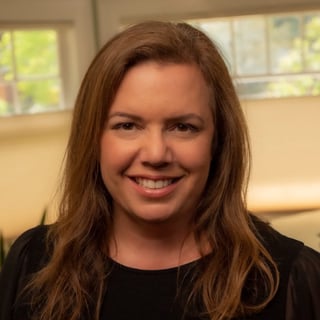
Leslie Barber has 15+ years experience launching and growing communities and businesses.
Currently a community strategy consultant, Leslie was most recently the Director, Customer Community & Advocacy at BILL, Head of the Coach Community at BetterUp and Group Manager, QuickBooks Community at Intuit.
She co-founded a membership-based community for purpose-driven coaches called Adagio as well as a community to support grievers called Grief Warrior.
Leslie has an MBA from the Kellogg School of Management at Northwestern University, is an ICF-certified professional coach and is a published author with LinkedIn Learning.
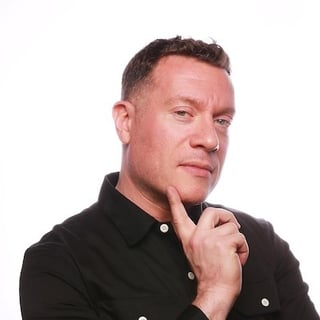
Josh Zerkel is Head of Marketing & Community-Led Growth at Gradual. A recognized leader in community strategy, he has built and scaled programs at Asana, Evernote, HeyGen, and CBS News that have driven millions in pipeline, global engagement, and cross-functional impact. He’s the author of The Community Code, and a trusted advisor to startups and enterprise teams building community-powered growth engines.
SUMMARY
Leslie Barber shares why depth of engagement matters more than reach, and how smaller, more intentional community experiences build trust, connection, and business value.
TRANSCRIPT
00:00:00:04 - 00:00:25:16 Josh Zerkel Hello and welcome to context. First with gradual and today's topic from reach to resonance why depth of engagement wins. Looking forward to talking about this one. I'm Josh circle head of marketing and community here at gradual. In case you are new to gradual, it's the all in one engagement and community platform to generate context across go to market and turn connection into lasting business impact.
00:00:25:18 - 00:00:48:15 Josh Zerkel As we begin. Please drop your questions in the Q&A and we'll get to as many as we can live. We'll also continue the conversation with our guest after the event in the live forum. AMA. And now I'd like to introduce you to our speaker, Lesley Barber. Welcome, Lesley. Lesley has over 15 years of experience launching and growing communities and businesses.
00:00:48:18 - 00:01:13:08 Josh Zerkel Currently a community strategy consultant. Lesley was most recently the director of Customer, Community and Advocacy at Bill. Prior to that, she was the head of the coach community at Better Up and Group manager for the QuickBooks community at Intuit. Lesley founded a membership based community for purpose driven coaches called a dojo, as well as a community support grievers called Grief Warrior.
00:01:13:10 - 00:01:25:19 Josh Zerkel Lesley has an MBA from the Kellogg School of Management at Northwestern University, is an ICF Certified Professional Coach, and is a published author with LinkedIn learning. Welcome, Lesley.
00:01:25:22 - 00:01:28:23 Leslie Barber Hey, Josh. Good morning. So nice to be with you.
00:01:28:25 - 00:01:33:28 Josh Zerkel Great to see you here. I see we have a friend attending. Janet. Welcome.
00:01:34:00 - 00:01:36:27 Leslie Barber Yay! Janet, welcome.
00:01:36:29 - 00:01:38:17 Josh Zerkel Great to see you.
00:01:38:20 - 00:01:39:21 Leslie Barber Love it.
00:01:39:23 - 00:01:50:21 Josh Zerkel Lesley, when you think about reach versus resonance, the topic of today's chat, what's the moment or pattern that made the real shift for you in this work?
00:01:50:23 - 00:02:15:26 Leslie Barber It's such a good question. I'm so glad we're having this conversation. Josh. I, you know, it's it's amazing how much our, society really focuses on bigger is better. And I even used to think that myself. Right? I used to think more members, more events, more reach must mean a better community. And, you know, we live in that.
00:02:15:26 - 00:02:44:09 Leslie Barber More is more culture. So it really makes sense. But what I learned over my experience is, is that the biggest moments weren't always the ones that had the most impact. Often times the what really brought the impact was the energy or the connection that happened in a room. The right people showing up, actually talking to each other and not just sitting next to each other or in a big room.
00:02:44:12 - 00:03:09:12 Leslie Barber And then most importantly, finding those conversations really invigorating. So that invigoration, that's kind of what got people to then come back and do it again and again. And that's where the resonance really makes a difference. That reach, quite frankly. And you know this, you can buy reach, right? You can pay for reach. You can make, you can fill big stadiums if you want to.
00:03:09:14 - 00:03:36:18 Leslie Barber But resonance is actually where it matters, and it's so much harder to do. So I really found that that shift came from working at QuickBooks founding community there. Building massive communities. The community at QuickBooks was huge, and it was so exciting, right? Because you see all these people come in and you're like, wow, so many people want to be here.
00:03:36:18 - 00:04:06:11 Leslie Barber And they're so excited. And then nothing, right? And then it's ends up being maybe just noise. And so that pattern that I noticed became really unsettling. We had these like huge moments and the nothing huge moments and then nothing. And so that's where I really felt like, okay, we need to shift the equation a little bit so that resonance becomes, what we're really trying to go for, because that's when I started to see people actually come back.
00:04:06:13 - 00:04:11:08 Leslie Barber I'm sure you've seen that, too. But, you know, energy really matters.
00:04:11:11 - 00:04:37:11 Josh Zerkel I have and and I think, in truth, if I'm looking back at the communities that I've led over the years, oftentimes it's it's management that's really hyper focused on get more members, do more things because in most parts of business, more frankly, is better. More revenue, more customers. But this is relationships. Community is all about relationships and I always define community as relationships at scale.
00:04:37:14 - 00:04:57:20 Josh Zerkel And it's very difficult to maintain quality relationships at scale. And just because you have more people doesn't mean you're building better relationships. You may not even be building more relationships at all, just getting more people in the door. And so I often had to have the conversation with with senior leadership of, we need to look at this beyond this year number.
00:04:57:20 - 00:05:04:17 Josh Zerkel We need to look at what's happening under the hood and how people are actually connecting and the depth to which they're connecting.
00:05:04:19 - 00:05:24:25 Leslie Barber So important that depth is and just the connection. As you know, I was at the U.S. Women's National Team soccer match last night in Seattle. There were 36,000 people in this stadium, right? But who did I connect with? The person to my right. The person to my left. Maybe I have five. The guy in front of me, right?
00:05:24:25 - 00:05:48:27 Leslie Barber Or the woman in front of me, most likely. So when it comes down to it, those registrations, those impressions, those member counts can feel really great. That volume can feel so exciting. But unless we make it relevant to the person who's there, unless we bring value to them that is truly meaningful, that makes them want to come back.
00:05:48:29 - 00:06:10:23 Leslie Barber The community will be empty. I mean, it'll be even even if you have lots of people there, it'll be lonely and quiet or or really, it'll probably be a blog. It won't be a community. And so you have to have that gravity, if you will. I watched project, Hail Mary this week, and I was thinking about that.
00:06:10:23 - 00:06:20:27 Leslie Barber You have to have the gravity to keep people in, to keep them coming back. Otherwise they just float away into space. And, you know, it's not a community anymore.
00:06:21:00 - 00:06:42:24 Josh Zerkel Yeah. And that's I think in my experience, it really speaks to the value that people are getting out of the community experience, not just the content and the resources, but the connection they have with other people and with the company who's who's hosting the community. It is about that more intangible part of it's beyond a number. It's what they're really getting and feeling from being part of that community.
00:06:42:27 - 00:07:01:14 Josh Zerkel When when you talk about resonance and depth of engagement, how do you define that in practice? Because I think for for folks who are used to like, let's focus on the numbers, they may not really understand even what, what that is. And so maybe you could talk about how you define depth of engagement and resonance and what it actually looks like inside of a community.
00:07:01:17 - 00:07:02:17 Josh Zerkel How plays out.
00:07:02:20 - 00:07:27:21 Leslie Barber Yeah. Happy to when I think about depth of engagement, I think about a shift from a content like where a lot of community started in customer support. Right? Let's educate people, let's bring content, let's make this a forum. And what are some of their goals? Well, some of their goals and support is closing the conversation as quickly as possible.
00:07:27:21 - 00:07:49:09 Leslie Barber Right. They want people to get their questions answered. And I have a lot of respect for that. But that is not a community. A community becomes community when you start to think of it as home, right, or as the community center in your neighborhood, right? You don't go to the community center to hang out by yourself. There's generally at least the person even checking you in.
00:07:49:09 - 00:08:13:07 Leslie Barber There's a relationship. There's a back and forth. You're seeing people that you know and you're not having the conversation stop. That depth of engagement is about making people feel like they're a part of something, that they're insiders, that they're getting more information, they're getting more connection, they're getting belonging. They're not just attendees at, an event or a forum.
00:08:13:07 - 00:08:35:00 Leslie Barber And so in actuality, I feel like that means, you know, are you seeing members welcoming other members? Like, that's one of my favorite moments in any community when I start to see the members themselves saying, hey, Josh, welcome. I'm so thrilled you're here. This is what we're up to. Or the members talking to each other, sharing knowledge.
00:08:35:00 - 00:08:54:02 Leslie Barber It's not just the host to the member or the brand to the member. But you see them actually repeat their contributions, come back again, you see them share maybe even a little bit of vulnerability, right? Like, hey, this didn't work for me. And so here's what I learned. And by the way, they get really nice endorphin hits when they do that.
00:08:54:02 - 00:09:19:29 Leslie Barber So it's good for everyone involved, right. But it's really shifting from consumption like I'm consuming everything to I'm actually contributing. One of my favorite signals that I know we've talked about before is when you start to see the community, hosts become much less central in the conversation. When you found a community like, at Bill, we founded that community from scratch.
00:09:20:02 - 00:09:51:00 Leslie Barber When you do that, of course the host is going to be more active to begin. And I'm talking about like a digital online community. The host is going to be participating 90% of the time. Maybe members are 10% of the time. The goal is really to flip that right and to see how much you can get the members communicating, so that the goal of being the host isn't about megaphone ING out, it's about supporting conversation so that you actually get the members talking.
00:09:51:05 - 00:10:17:26 Leslie Barber When we hit 5050 at Bill, we celebrated big time because that's a huge milestone for community health, and it really shows how important it is to build that resonance and to, you know, really make sure it's a, a meaningful, deep conversation. So those are ways that I think about depth of engagement. Those are ways that, you know, what, you're building is real.
00:10:17:29 - 00:10:22:11 Leslie Barber And it's not just a megaphone to a to an empty space.
00:10:22:14 - 00:10:42:00 Josh Zerkel Yeah. This this I think I've seen play out quite a bit as well, where one of the things I'm seeing in communities these days is having the bigger, broader community experience, where maybe it is more consumption oriented, where you have a broad set of content and resources that are broadly applicable to everyone. Let's say a customer of a community, a community of a customer.
00:10:42:01 - 00:11:03:20 Josh Zerkel But my words are failing me today. Who are customers of a company who probably everyone needs the same type of information, but then having more targeted, smaller spaces where people can have more of the intimate conversations, where they feel like they can really engage with their peers in conversation, in vulnerability, in ways that feel that they have real depth.
00:11:03:22 - 00:11:36:20 Josh Zerkel And I think more and more as as especially if you work in a community program of scale, balancing that scale with the depth of engagement and the intimacy becomes really important so that people feel safe and comfortable having those more intimate conversations. Can you maybe share an example that you've seen and you've touched on this, a little bit of balancing the the need for the big community, because often that's a management wants to see with with the need for members to have that more curated, smaller, more intentional experience.
00:11:36:26 - 00:11:38:26 Josh Zerkel How did that work? What was that like?
00:11:38:29 - 00:12:03:02 Leslie Barber Yeah, it's so important to do. I'll just give one example. When I was working at Betterup, which is a coach platform, I, my, my team managed the coach community. There were about 3000 coaches around the globe and they love to come together. Coaches work alone. Right. And so, you know, oftentimes they're looking for that kind of connection.
00:12:03:04 - 00:12:32:06 Leslie Barber But 3000 people in a community is a lot of people. And so what we saw was that they would want to kind of dive into second layers of identity. So they identified as coaches. But then there were folks who were Spanish speaking coaches, or there were folks who were Europe based coaches, or there were folks who, we actually had an interest of male coaches because it is a female heavy environment.
00:12:32:08 - 00:12:53:18 Leslie Barber And we were able to kind of dive down into a second layer of identity to help them build those kinds of connections. And by the way, it wasn't my team who was leading those. It was the community members themselves who were saying, I want to generate this kind of connection. You know, as I was thinking about our conversation, I was reflecting on resources.
00:12:53:18 - 00:13:16:24 Leslie Barber And of course, my favorite new resource is the Community Code Book by Josh circle. But one of my second favorite resources is the Art of Gathering by Priya Parker. It's not something I think most community, leaders would think about, but, you know, before that book, I wanted everyone to come to my party, right? I wanted I would I would have big parties.
00:13:16:24 - 00:13:46:20 Leslie Barber I would have big events. I would want everyone to be there. But what I learned is that that's really where depth goes to die, right? And you can't make those connections if you walk into a room full of people, you actually sometimes feel lonelier in those moments than you do if you, you know, are in a smaller gathering and there's a line that really stuck with me from the Art of gathering, and that is that most gatherings fail because they're designed for convenience.
00:13:46:27 - 00:14:10:15 Leslie Barber So we're trying to make it as easy as possible for people to come. And I think a lot of communities fall into that trap. Like resonance requires intentionality, you know, specificity, knowing who you're building for and why. And so having these smaller spaces where people are coming because, oh, I know these are coaches and I know they're Spanish speaking.
00:14:10:17 - 00:14:35:29 Leslie Barber And so those two things will instantly connect us. That was so much more powerful than having even just the broader coach community, if you will. We also started to do in-person meetups and then you got the connection like, oh, we, I, you know, we hosted one here in Portland, Oregon, which is where I am. And all these Portland based coaches could come together and then support each other.
00:14:36:06 - 00:15:14:22 Leslie Barber So there was just a lot of that kind of beautiful connection. I've recently started consulting with Just Works, and I'm absolutely loving what the community team Michelle and Ella are building there. And I know you're you've worked with them as well. And the one that I'm really excited about for them is the Mulberry Supper Club, which is something that they have developed where they're inviting 12 customers and then in one specific industry, and they're asking them to bring a plus one, and then they're doing these really intentional connection dinners and there's no selling, there's no pitches, none of that.
00:15:14:22 - 00:15:44:19 Leslie Barber It's just associating that just works brand with building relationships between humans. And that is so powerful. So I really feel like that, we can have a big community, right? I mean, I, I think about me last night at the U.S. Women's National team, I feel a part of that fandom, if you will. But it's not until I get with my people, you know, the Portland bus of 55 people that drove up there, those are my new besties.
00:15:44:19 - 00:15:56:20 Leslie Barber And that's my community, right? That's the one. So I'm not trying to lower the bar to get everyone in any anymore. I'm trying to raise the bar to make it something that they want to be a part of.
00:15:56:22 - 00:16:24:00 Josh Zerkel I think that's a really excellent way to frame it because we if we're building communities, you know, in our context, it's in the guise of a business because businesses are always trying to grow the notion of like the bigger community is the better community is something that seems like it would be the way to go. But yeah, well, you can have the numbers if you don't have the relationships, if you don't have the depth of engagement, I don't really know what you have other than numbers at that point.
00:16:24:05 - 00:16:32:22 Josh Zerkel Right. And I don't think your members know either what they have, other than being part of this thing where they feel nameless, faceless, and that's the inverse of why people join communities.
00:16:32:22 - 00:16:34:21 Leslie Barber So the inverse, yes.
00:16:34:24 - 00:16:59:04 Josh Zerkel Yeah. The way that you're connecting these dots makes a ton of sense. But still, I found that for for most businesses, it's really hard to wrap their heads around. We need to balance both the growth but also the the resonance and the engagement. Why is it so hard, in your opinion, for businesses to really shift towards these more focused, greater depth, higher signal experiences and community?
00:16:59:04 - 00:17:03:01 Josh Zerkel Why? Why is that? They find it so difficult to do that?
00:17:03:03 - 00:17:35:03 Leslie Barber It's such a good question. I mean, community for me is a business strategy, not a marketing strategy. And yet often community sets within marketing or within sales. And that's fine. It's not to sit somewhere, right? I understand that, but those are both environments where traditional binary ROI numbers are everything, right? And so you can't really put community into that binary system and expect it to last.
00:17:35:05 - 00:18:01:08 Leslie Barber You can put it into a binary system and it will fail. But in order to really create those relationships over time, there's that gen estate qua right. That kind of comes with relationship building, and it's really hard. I actually think it's harder to relationship build with a brand, to do community than it is to do those like, you know, tweak on, tweak off binary ROI, ROI, style motions.
00:18:01:10 - 00:18:31:04 Leslie Barber I support them, I respect them, but it really comes down to building, you know, a smaller, more purposeful environment. And that is sometimes a hard story to tell. So as community leaders, we have to reeducate what success means, like, means. And it's a constant nonstop process, right? It isn't just about how many people show up. It's about what happened when they showed up.
00:18:31:06 - 00:19:02:13 Leslie Barber I worked it into it for years. Scott Cook, is one of my idols and mentors when it comes to product launches. And I think of community like a product launch a lot of times. And Scott always focused first on what he called the love metrics. And the first thing that you do when the love metrics is you create something that participants actually love, like actually use that word, which is a word that we don't always associate with business, but is a word that really matters and that they'll want to return to that, want to tell their friends about.
00:19:02:15 - 00:19:30:21 Leslie Barber It's really hard work to do that. But you don't move forward until you've developed that kind of love for the product or the community. You you can't just broadcast out into the ether and hope it's going to work. You have to design, you have to facilitate, you have to follow up. You have to create experiences. So, you know, I think that's a huge learning for me, too, from Art of gathering.
00:19:30:24 - 00:20:03:05 Leslie Barber You know, one of the things I was thinking about, you know, in terms of, of that book is really how you develop, environments and experiences where you are inclusive but also exclusive. You can't actually have both in a community. You can't just welcome everyone. And when I read that book and she said, if you are everything to everyone, you're nobody to everyone, basically, no one feels special.
00:20:03:05 - 00:20:25:07 Leslie Barber I feel like my head kind of exploded in that moment. So often people want to optimize for scale. They want big numbers, but they don't ask the next question, which is, okay, so what? So now what? What's happening with those big numbers? Is anything deep there? And so you really have to focus on that. And and it takes a lot of education as I know.
00:20:25:07 - 00:20:26:11 Leslie Barber You know.
00:20:26:14 - 00:20:28:06 Josh Zerkel I know all too well that definitely I.
00:20:28:06 - 00:20:29:19 Leslie Barber Know, I know.
00:20:29:21 - 00:20:52:00 Josh Zerkel I often had the conversation with stakeholders, especially the ones in marketing, because I, I've always set within the marketing org of, you know, in the world of marketing, if most marketers do their job well, they send a thing and then people react to it, and then that's kind of the end of the entire process. If you're like a like so psycho marketer, you send an email, people click or they don't, they open it or they don't.
00:20:52:02 - 00:21:11:12 Josh Zerkel Or if you run a campaign, people read it or they don't. But if if we in community do our job as well, we send a message and then people respond, and then we have to respond back and get other people in the community to also respond. And so it's just exponentially different. Neither is good or bad. They all serve their purposes, but it's very, very different.
00:21:11:12 - 00:21:34:14 Josh Zerkel And so that education, it's it's an ongoing process. If you are leading or building a community program of helping people understand that what we do, while it may pieces of it may look similar on the face of it, to how other functions within a company mechanically work, what's underneath it. And what we're trying to build is fundamentally different because it's not transactional, it's relational.
00:21:34:16 - 00:21:51:01 Josh Zerkel Whereas most marketing and sales who go to market programs are highly transactional, very binary. As you said, relationship building is the inverse of binary. Unless is what you don't want to have happen. And so there's a lot of things under the hood to make all of that happen. So thank you.
00:21:51:01 - 00:22:20:04 Leslie Barber And that's so true with like customer support too right. I mean you think about where community was founded, which was often in support as a way to answer questions to get, you know, customers to answer each other's questions. They literally would close those conversations and say, okay, done. And they would be measured on that. And so if you're measured constantly on how quickly you close something, and now we're trying to build a community where, you know, you want to be measured on how how open it is.
00:22:20:04 - 00:22:54:12 Leslie Barber And let's ask a question, what what what how would we ask a question? What question should we ask? It's actually ironic. I feel like my background as a trained coach has really helped with community, because I'm, I'm a trained question asker. Right. And so bringing that those questions, being bringing forward questions to ask, of the member in a way that doesn't make them defensive or feel bad, but instead lifts them up and opens their heart to, new possibilities, I think is really critical in community.
00:22:54:12 - 00:23:12:11 Josh Zerkel Oh, absolutely. Because it's all the art of conversation. We're just having conversations at a different scale and more publicly in most cases, than we would 1 to 1. And fostering those conversations, helping them build and helping equip community members to have those conversations themselves is part of the nature of what we do.
00:23:12:13 - 00:23:52:03 Leslie Barber Yeah, absolutely. One of my other favorite resources is the book Unreasonable Hospitality. I don't know if you've read that one, but oh my gosh, I love it so much. And it's such a beautiful, kind of repertoire or harmony around this idea that if we are unreasonably, if you will, service oriented for the people who are coming in to our communities, and if we are, thinking about not what we do for them, but how we make them feel that that is what brings them back, like when we touch their heart.
00:23:52:03 - 00:24:15:09 Leslie Barber I love that Brené Brown quote where she says, stories are data with a soul like data reminds me of of this kind of quantity conversation. It's all about big data and who has the most data and the reality is that no, what we remember are the stories that are associated with that data. So just like in community, nobody's going to remember how many other people were in that room.
00:24:15:13 - 00:24:27:14 Leslie Barber What they're going to remember is the conversation they had and how it made them feel. And that's what we need to be able to create in a to to create that kind of resonance, to get people to come back.
00:24:27:17 - 00:25:00:11 Josh Zerkel Absolutely. Well, speaking of data, we have a variety of data that we look at as community builders and our cross-functional stakeholders look at whole other sets of data, but it's often our job to try to translate how what we're doing impacts their work, hopefully positively. Where and how have you seen the work that we do on the community side, especially with deeper engagement, translate into real business impact for these other teams in ways that they can easily understand, whether it's new product or growth or retention or advocacy.
00:25:00:12 - 00:25:03:17 Josh Zerkel How has that looked in in some of the work that you've done?
00:25:03:19 - 00:25:35:18 Leslie Barber I mean, all of the above. And as community leaders, we have to be strategic in how we tell this story. If you know that your leaders care about the numbers, care about the big, the big numbers, the percentages, what have you, lead with those? Fine. No problem. But when it comes to business outcomes, it's actually the depth of of, like, communication, the depth of connection, the depth of engagement that is going to be what brings the business outcomes that we think we want from scale.
00:25:35:21 - 00:25:58:22 Leslie Barber We need those deeper moments to get the right product feedback, right to get. If people aren't talking with each other, how are we going to get any product feedback to give to the product organization? But if they are and they feel safe and they feel listened to and heard, they are going to bring forward product conversations that they wouldn't have anywhere else.
00:25:58:28 - 00:26:17:07 Leslie Barber They're going to bring forward ideas. They're going to bring forward, things they like and don't like, and they're not even going to think about it. They're just going to do it. And that is gold, absolute gold. It's very different for a member of a community to offer information than it is for a market researcher to go and ask them, what do you think?
00:26:17:10 - 00:26:43:12 Leslie Barber And so those product insights can be so much better coming from a, a well, developed community, than other places, I think about retention as well. People like to stay where they feel seen and heard as humans. That's what we want. We want to feel seen and heard. We want emotional connection. And, you know, not just like functional usage, right?
00:26:43:12 - 00:27:14:09 Leslie Barber We want that emotional connection that drives trust, which is earned, and loyalty which takes time. And so you will get stronger retention if you can invest in people feeling that kind of heart and emotional connection with you. You know, I think about Bill and what Janet, who I know is here built, at the, at the company around advocates and the storytelling and the, developing of these rock stars.
00:27:14:12 - 00:27:52:01 Leslie Barber There was a lot of one on one personal white glove treatment to these advocates. It was not just, who wants to do this? It was Janet and team really getting in there and connecting, finding out what, gets people excited. So all of those are areas the business cares about. It's just a matter of understanding how these high signal moments, these really, you know, wonderful connection moments can actually drive the bigger business outcomes than a stadium full of people who don't talk to each other.
00:27:52:04 - 00:28:16:03 Josh Zerkel Yeah, I think that is amazing to point out all the different ways that by building these relationships in greater depth, it can affect many different outcomes across the business. I it makes me think of conversations I used to have at one of the companies I build community at. I won't name them, where I was having a conversation with the product team and I said, you know, we get lots of really amazing feedback from the community about what they want to see in the product.
00:28:16:06 - 00:28:40:00 Josh Zerkel And their response was, well, we already have UI research for that. And it's a totally different modality by like seeking out feedback versus people just offering it and different motivation behind it. Both are valid, but they're very, very different. And it's so easy for our cross-functional partners to conflate these things with it. In fact, they may just not understand how community actually works and what it can offer them.
00:28:40:03 - 00:28:59:20 Leslie Barber And I'm sure a great market researcher can cut through the noise of this. But I learned the hard way in my first business, nurture Bella. We made prenatal vitamins, and when we went out and they were non pill format, when we went out to women and we asked them, are you going to take a prenatal vitamin that's in a bar or a piece of chocolate?
00:28:59:22 - 00:29:24:17 Leslie Barber Overwhelmingly, 85% overwhelmingly said, absolutely, because they wanted to please us. They wanted to say what they thought we wanted to hear, but their behavior was very different when it actually happened. And I remember Scott Cooke used to talk about that, say, do ratio of what people say to you versus what they do. I almost don't even want to listen to what people say they're going to do in community.
00:29:24:17 - 00:29:47:05 Leslie Barber I want to see the behavior. I want to get in there and understand that. And that is, you know, I recently, as you mentioned, co-founded, coach, a purpose driven coach community, called a dojo, and one of the things I just love about that is that when we started, we went out to 25 coaches and we asked them to co-create with us.
00:29:47:12 - 00:30:09:23 Leslie Barber And so, because of that co-creation, we were able to really build something that a whole bunch of people wanted, and build it really judiciously and thoughtfully and make it a two way conversation with them. So you don't need to build massive community, just build a small one that really works and go from there.
00:30:09:26 - 00:30:25:01 Josh Zerkel That's great. Well, in that, in that vein, if someone who maybe already has a community program or wants to experiment with this greater depth and resonance rather than just the get more scale, what's a good place for them to start if they're not familiar with building things this way?
00:30:25:04 - 00:30:56:21 Leslie Barber Yeah, I love that question. You don't overhaul everything, right? Like, you know, if you if you've built a big community, good on you. And now it's a matter of taking that big community and bringing it. I remember Scott Cooke used to say go broad to go narrow, right? Like you've got this big community, but what are identity connections that you could make within that and maybe even take that bigger community, see, listen to who's talking and bring, you know, ten people together to have a conversation.
00:30:56:23 - 00:31:26:22 Leslie Barber Maybe identify the top 5% of your members and build something just for them. A really easy one is to never put anything out there without a, question. Try to build conversation into that bigger community that then pulls out the people who are really invested and make it a make a conversation with them. So if you're starting from scratch, start small and really understand those love metrics.
00:31:26:28 - 00:31:38:04 Josh Zerkel So yeah, I too am a big fan of starting small. You don't have to boil the ocean. You can just do one thing, one question, one conversation, and that gets the ball rolling.
00:31:38:06 - 00:31:39:07 Leslie Barber It's so important.
00:31:39:13 - 00:31:47:13 Josh Zerkel Yeah, yeah. Like just just starting is the most important thing. You'll figure it out as you go, and your members will tell you what they want to engage with in what they want.
00:31:47:18 - 00:32:07:18 Leslie Barber So exactly. And and so often what we think is going to happen doesn't. And so you know there but that doesn't mean there's not magic or sparkle dust that comes out of these conversations that we're building. And that's what's really important. Put it out there and listen. Listen to what they're saying. And and sometimes you have to be the bouncer, right?
00:32:07:18 - 00:32:18:29 Leslie Barber Sometimes you have to be the one who says to the business, no, we're not going to do that because I need to give this space, precious time in order to, you know, to really build something that matters.
00:32:19:01 - 00:32:24:22 Josh Zerkel Well, Leslie, thank you for all of this advice today. This is an awesome conversation, as I, I loved it.
00:32:24:25 - 00:32:25:03 Leslie Barber If.
00:32:25:03 - 00:32:28:16 Josh Zerkel People want to find you online, where can they find you?
00:32:28:18 - 00:32:51:11 Leslie Barber LinkedIn is great. Leslie S Barber at LinkedIn. And feel free to reach out to me there. I love having conversation about community, so don't hesitate to throw me a DM. My email Leslie at Leslie barber.com. So feel free to also, hit me up there as well. And Josh, always so great to be with you and so much of what I shared today, I've learned from you.
00:32:51:11 - 00:32:57:01 Leslie Barber So thank you for this conversation and for just being a great friend and mentor over the years.
00:32:57:03 - 00:33:15:17 Josh Zerkel You are a gem. Thank you. Leslie, I really appreciate that, honestly. Well everyone, thank you all for being here. If you have more questions for Leslie, she just told you where you can find her online and you are also welcome to ask questions in the forum. AMA, which is a partner to this event. And with that, I will close out and say thank you to everyone who's here.
00:33:15:18 - 00:33:27:21 Josh Zerkel Thank you liane behind the scenes for making things run smoothly. Thank you Leslie for sharing all of your great advice and your wisdom, and we'll see everyone in the community join us at future events. We will see you there. Thank you all.
00:33:27:24 - 00:33:28:07 Leslie Barber Thank you.
