
New Year, New Strategies: Community Roundtable in San Francisco
# Format: Event Recaps
# GTM Strategy
What community and GTM leaders are paying attention to as they connect engagement, signals, and real organizational context.
January 23, 2026
Joshua Zerkel
January always creates a particular kind of tension for community and GTM leaders.
Plans are getting finalized. Priorities are being set. Expectations are high. At the same time, many teams are still carrying questions from the year before. What actually worked? Which signals mattered? Where did effort turn into impact, and where did it just turn into more activity?
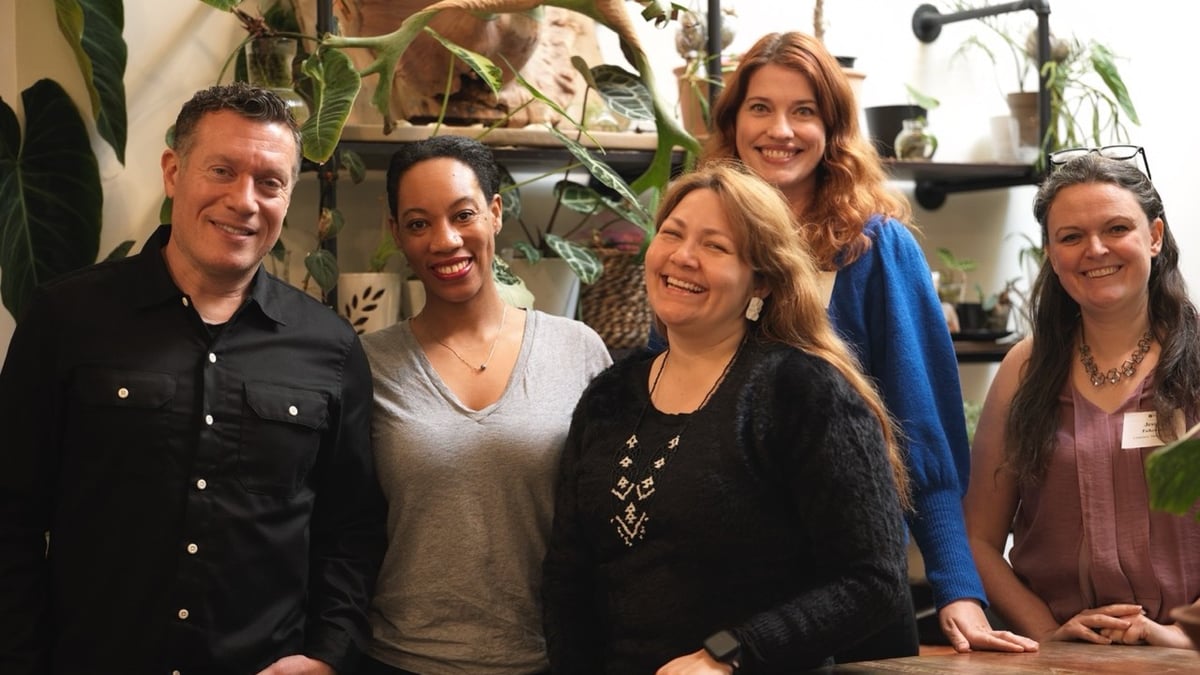
That was the backdrop for our January Community Roundtable in San Francisco. We brought together a small group of practitioners from community, marketing, events, and cross-functional roles to talk through what’s changing in their strategies and what they’re paying closer attention to as they plan ahead.
There were no slides and no formal agenda. We started with coffee, breakfast, and a simple activity designed to ground the conversation in lived experience rather than theory.
The activity: surfacing strategy through signals
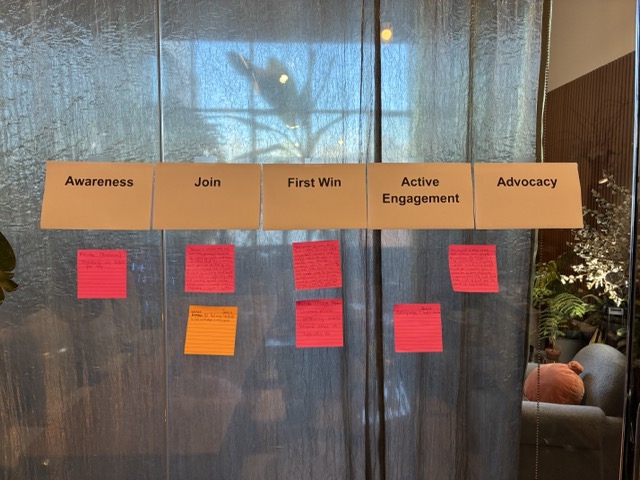
To kick things off, we used a straightforward "Strategy Signals Framework" based on the member journey:
- Awareness
- Join
- First win
- Active engagement
- Advocacy
As people arrived, I asked them to add a sticky note under the stage where they were seeing an insight, shift, or signal influencing their strategy. Each note included a name and a short description of what they were noticing.
The goal wasn’t to create a perfect model or force agreement. It was to surface context. What are people actually seeing in their communities, events, and programs that’s shaping how they make decisions?
Within a few minutes, the wall reflected a shared picture of where attention was concentrating and where strategies were starting to move.
What surfaced across the member journey
Awareness is becoming more deliberate
Several notes landed under Awareness, and a pattern emerged quickly. Teams are narrowing their focus.
Rather than trying to reach everyone, people talked about choosing specific audiences and designing moments that clearly signal who something is for. In some cases, that meant closer collaboration with marketing or field teams. In others, it meant fewer events or initiatives, approached with more intention.
The underlying signal was about relevance. Awareness feels more useful when it’s grounded in a clear understanding of who needs what, and why.
Joining hinges on trust and clarity
Under Join, the conversation shifted away from volume and toward trust.
People shared examples of how new members decide whether to participate at all. Often, it came down to whether the environment felt thoughtful and human. How someone was welcomed. Whether expectations were clear. Whether there was a sense that participation would be worth their time.
These moments weren’t described as complex or resource-heavy. They were described as intentional. Joining worked best when it felt contextual, not transactional.
First win moments are carrying more weight
First win generated the most discussion.
Across roles, people described small moments that changed how someone experienced the community. A focused conversation. A peer introduction. A well-timed event that answered a real question.
These moments weren’t always planned in advance. They often emerged from environments designed to make connection easy. Once someone had that early experience of value, it shaped what came next.
Several participants noted that these early wins influenced not just engagement, but how community was perceived internally. They created stories and context that traveled beyond the community team.
Active Engagement raises questions about scope and sustainability
Under Active Engagement, the tone shifted again.
People spoke openly about the pressure to keep activity high. More programs. More events. More touchpoints. At the same time, they described teams feeling stretched and unclear on what success actually looks like.
The conversation here moved in a few directions, which felt telling. It reflected the real tension between maintaining momentum and protecting focus. Engagement is valuable, but it also raises questions about boundaries, capacity, and purpose.
What came through wasn’t a call for less engagement, but for clearer framing. When teams are aligned on what engagement is meant to support, decisions become easier to make and easier to explain.
Advocacy reflects accumulated experience
Advocacy came up less frequently, but consistently.
People described advocacy as something that followed sustained, positive experiences over time. It wasn’t something they could manufacture on demand. It showed up when members felt supported, successful, and understood.
In that sense, advocacy functioned as a signal of accumulated context. It reflected how well earlier stages of the journey were working together.
Context as the connective tissue
As the conversation unfolded, one theme kept resurfacing, even when it wasn’t named directly. Context.
What people shared wasn’t just activity data. It was meaning. Why something mattered. What it revealed about intent, readiness, or friction. Community conversations and events surfaced nuances that dashboards alone don’t capture.
Several participants talked about how these insights traveled. A pattern noticed in community informed a marketing shift. An event conversation shaped how a team thought about onboarding. These weren’t always easy to quantify, but they influenced real decisions.
When context moves across teams instead of staying siloed, its value compounds.
What felt different this time around
As we wrapped up, I asked what felt different about how people were approaching their work.
Many spoke about being more selective with their time and energy. Others talked about paying closer attention to early signals rather than waiting for lagging indicators. There was also a shared sense that community work is being asked to support broader GTM decisions more directly.
That shift brings opportunity, along with new expectations. It requires clearer communication, stronger alignment, and confidence in how insights are shared across the organization.
My take
What I appreciated most about this roundtable was the candor.
The conversation didn’t stay neatly on topic, and that felt appropriate. Community strategy intersects with leadership expectations, team capacity, and business goals all at once. Those intersections rarely show up as clean narratives.
The Strategy Signals Framework gave us a way to anchor the discussion in real experience. It reminded us that strategy often starts by paying attention to what’s already happening and staying curious about what it might mean.
Key takeaways
- Early engagement signals often shape strategy before metrics catch up
- First win moments carry outsized influence on perception and momentum
- Context becomes more valuable when it moves across teams
- Engagement decisions get easier when purpose and boundaries are clear
FAQ
What was the focus of the January Community Roundtable?
The roundtable focused on how community and GTM leaders are adjusting their strategies based on signals they’re seeing across the member journey.
What is a Strategy Signals Framework?
It’s a simple way to map insights and shifts across stages of the member journey to surface patterns and shared context.
Who was this conversation designed for?
Practitioners working in community, marketing, events, and cross-functional GTM roles who are navigating strategy and alignment questions.
Will there be follow-up resources?
Yes. Several playbooks will be published that expand on the themes discussed.
Comments (0)
Popular

Dive in
Related
Blog
From Engagement to Intelligence: Community Roundtable in San Francisco
By Joshua Zerkel • Nov 19th, 2025 • Views 75
Resource
Building a Smarter Community Operating Model for the Year Ahead
By Joshua Zerkel • Jan 27th, 2026 • Views 22
Blog
From Shared Wins to New Ideas: Community Roundtable with Gradual in San Francisco
By Joshua Zerkel • Sep 24th, 2025 • Views 24
Blog
Building Trust and Connection in the Age of AI: Community Roundtable with Gradual
By Joshua Zerkel • Oct 24th, 2025 • Views 74
Blog
From Engagement to Intelligence: Community Roundtable in San Francisco
By Joshua Zerkel • Nov 19th, 2025 • Views 75
Blog
From Shared Wins to New Ideas: Community Roundtable with Gradual in San Francisco
By Joshua Zerkel • Sep 24th, 2025 • Views 24
Blog
Building Trust and Connection in the Age of AI: Community Roundtable with Gradual
By Joshua Zerkel • Oct 24th, 2025 • Views 74
Resource
Building a Smarter Community Operating Model for the Year Ahead
By Joshua Zerkel • Jan 27th, 2026 • Views 22