
Gradual Community

Planning as a Leadership Skill for Community and GTM Leaders
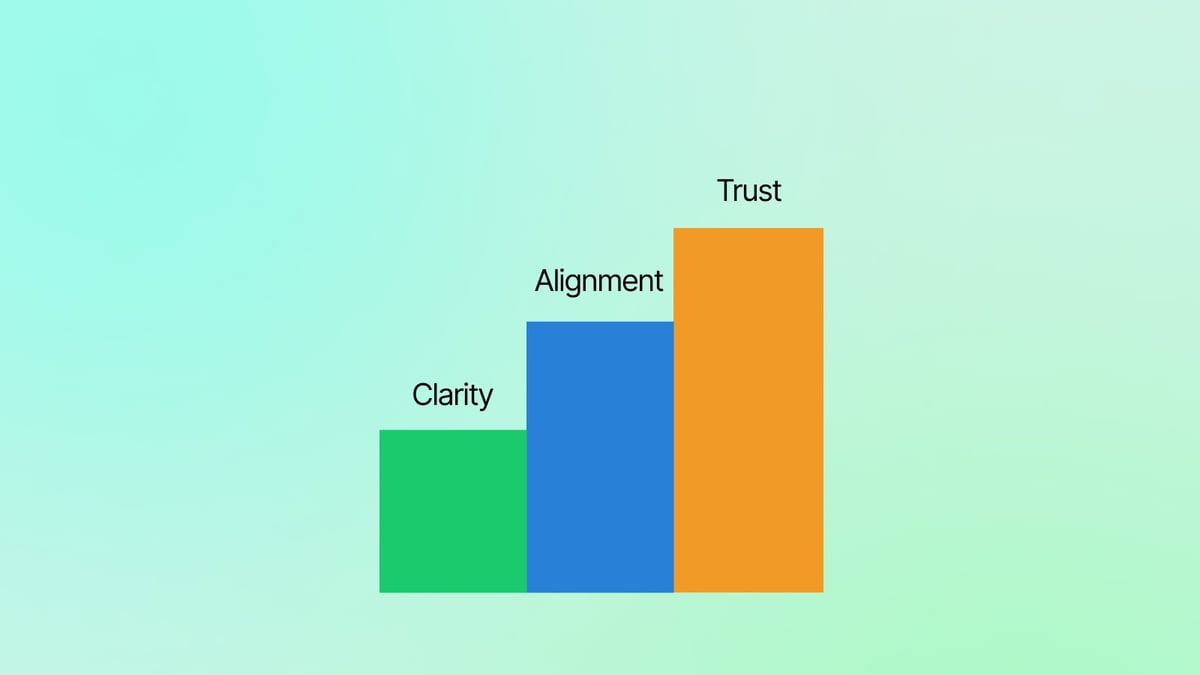
Planning as a Leadership Skill for Community and GTM Leaders
# Theme: Leadership & Executive Perspectives
# Format: Thought Leadership
# Role: Marketing/Growth

How clarity, sequencing, and follow-through shape trust over the course of the year.

January 28, 2026
Joshua Zerkel
Joshua Zerkel
Planning as a Leadership Skill for Community and GTM Leaders
Planning season is often treated as a moment to get organized. Goals are documented, priorities are named, and teams are asked to commit. For leaders in community and GTM roles, these conversations tend to carry extra weight. They are some of the few moments where leaders explain not just what the team will focus on, but how decisions will be made when things inevitably change.
What teams remember from planning is rarely the exact wording of the plan. They remember how confident leadership felt, how open the conversation was, and whether tradeoffs were acknowledged or glossed over. Those impressions shape how teams interpret direction for months afterward.
Over time, planning becomes one of the primary ways leadership credibility is built or eroded.

How planning signals leadership judgment

In community and GTM work, plans are rarely built on complete information. Signals are partial, dependencies are complex, and outcomes depend on behavior outside any one team’s control. Leaders know this, but the pressure to appear decisive during planning can be strong.
When plans are presented without acknowledging uncertainty, teams often infer that deviations will be unwelcome. They may move quickly at first, but they hesitate later when reality diverges from assumptions. Adjustments feel risky, even when they’re necessary.
Leaders who allow space for uncertainty during planning tend to see different behavior. Teams ask better questions earlier. Concerns surface sooner. Decisions evolve without losing momentum. Over time, this pattern reinforces trust in leadership judgment rather than weakening it.

When planning creates misalignment instead of direction

Planning is one of the few moments where leaders can align multiple teams around shared intent. When that alignment is weak, the consequences usually show up gradually.
Community teams may interpret priorities one way, while GTM teams interpret them another. Each group moves forward with confidence, only to discover later that expectations don’t match. Coordination becomes reactive. Conversations shift from “what are we learning?” to “why didn’t this work?”
These situations rarely stem from poor execution. More often, they trace back to planning conversations where assumptions were left implicit or priorities were framed too broadly to guide real decisions.
Leaders who invest time in clarifying sequencing, dependencies, and decision principles during planning tend to spend less time resolving confusion later.

How planning shapes team behavior over time

Teams pay close attention to what happens after planning, not just what is said during it. When leaders revisit plans thoughtfully, adjust based on new information, and explain why priorities are shifting, teams learn that adaptation is expected.
When plans are treated as fixed commitments, teams learn a different lesson. They optimize for compliance rather than insight. Early signals are shared cautiously or not at all. Learning slows, even as effort remains high.
Over the course of a year, these patterns compound. Planning choices made in January influence how safe teams feel raising issues in June and how confidently they navigate tradeoffs in October.

Planning as a career signal

For community and GTM leaders, planning is often one of the clearest signals of leadership maturity. Not because plans are perfect, but because of how leaders handle ambiguity, pressure, and change.
Peers and executives tend to notice:
  • How clearly priorities are framed.
  • Whether leaders acknowledge tradeoffs openly.
  • How plans evolve when conditions shift.
Leaders who approach planning with thoughtfulness and openness tend to build reputations for sound judgment. That reputation often matters more than any single outcome.

How planning behavior compounds over time

Planning is not just a step in the operating cycle. It’s an ongoing expression of leadership. The way leaders frame priorities, acknowledge uncertainty, and revisit decisions shapes how teams behave long after planning season ends.
When planning is treated as a shared sense-making process rather than a one-time declaration, it becomes a source of stability instead of pressure.

Key takeaways

  • Planning conversations shape leadership credibility over time.
  • Clear framing and explicit assumptions reduce downstream friction.
  • Teams learn how to adapt by watching how leaders revisit plans.
Comments (0)
Popular
avatar

Table Of Contents
Dive in

Related

Resource
The Annual Planning Framework for Community and GTM Leaders
By Joshua Zerkel • Jan 6th, 2026 Views 14
Resource
Mentorship as a GTM Growth Lever
By Joshua Zerkel • Dec 4th, 2025 Views 1
Resource
Gradual’s Community Superintelligence: What It Means for GTM Leaders
By Joshua Zerkel • Nov 10th, 2025 Views 15
Resource
Community Leaders on What GTM Teams Overlook About Customers
By Joshua Zerkel • Dec 4th, 2025 Views 1
Resource
The Annual Planning Framework for Community and GTM Leaders
By Joshua Zerkel • Jan 6th, 2026 Views 14
Resource
Gradual’s Community Superintelligence: What It Means for GTM Leaders
By Joshua Zerkel • Nov 10th, 2025 Views 15
Resource
Community Leaders on What GTM Teams Overlook About Customers
By Joshua Zerkel • Dec 4th, 2025 Views 1
Resource
Mentorship as a GTM Growth Lever
By Joshua Zerkel • Dec 4th, 2025 Views 1
© 2026 Gradual Community
Privacy Policy