
Event Replay: Context First: Community Measurement Your CFO Will Trust
Speakers

Mark Birch is the co-founder and CEO of TribeROI, the AI-powered measurement layer connecting community activity to revenue, retention, and innovation. He founded the Enterprise Sales Forum and scaled it to 30,000 members across 24 cities worldwide. He launched and scaled Stack Overflow's enterprise business globally, and later led community programs across 30 countries as an AWS Global Startup Advocate. He's the author of Community-in-a-Box (second edition), a guide for building communities that deliver measurable impact. When Mark is not working on his startup or tinkering with AI, he is exploring the night markets and local food stalls of Taiwan, his new home.
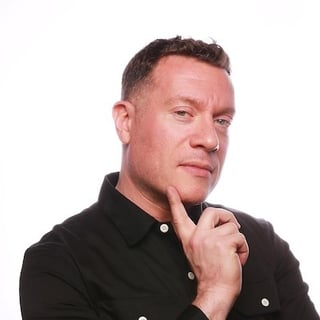
Josh Zerkel is Head of Marketing & Community-Led Growth at Gradual. A recognized leader in community strategy, he has built and scaled programs at Asana, Evernote, HeyGen, and CBS News that have driven millions in pipeline, global engagement, and cross-functional impact. He’s the author of The Community Code, and a trusted advisor to startups and enterprise teams building community-powered growth engines.
SUMMARY
Learn how to connect community signals to business outcomes and build a measurement approach that finance and executive teams can trust.
TRANSCRIPT
00:00:00:09 - 00:00:29:03 Joshua Zerkel Hello everyone, and welcome to Context First with Gradual and today's topic, community measurement your CFO will trust. I am Josh Zerkel, Head of Marketing and Community here at gradual. In case you are new to gradual, it's the all in one engagement and community platform to turn connection into lasting business impact and grow engagement beyond your product. Before I introduce our guest expert, a quick note please drop your questions in the chat and we will get to as many as we can today.
00:00:29:05 - 00:00:56:26 Joshua Zerkel Now, I'd like to introduce you to our guest speaker. Mark Burch is the co-founder and CEO of Tribe ROI, the AI powered measurement layer connecting community activity to revenue retention and innovation. He founded the Enterprise Sales Forum and scaled it to 30,000 members across 24 cities worldwide. Mark also launched and scaled Stack Overflows enterprise business globally, and later led community programs across 30 countries.
00:00:56:26 - 00:01:18:00 Joshua Zerkel As an AWS Global Startup Advocate. He's the author of community in a box A guide for Building Communities that Deliver Measurable Impact. When Mark is not working on his startup or tinkering with AI. He's exploring the night markets and local food stalls of Taiwan, his new home. Welcome, Mark.
00:01:18:02 - 00:01:21:11 Mark Birch Thank you so much. I'm really glad to be here.
00:01:21:13 - 00:01:38:28 Joshua Zerkel So let's go in the Wayback Machine and start at the beginning. You built communities at Enterprise Sales forum, Stack Overflow AWS. When did measurement of community first become a challenge in your work that you started to notice and focus on?
00:01:39:01 - 00:02:05:22 Mark Birch I think very early on, because when when you start to think about the building, any sort of community like you get really excited about the thing and all you want to do is make it really great from an experience point of view for members. And then the reality starts to set in, because now you got to do things like, wow, this costs money.
00:02:05:25 - 00:02:38:12 Mark Birch You now have like people involved. There's like companies that start to reach out cold that say, hey, we heard about your community. Can we sponsor it? And now I'm kind of faced with, okay, well, I'm trying to deal with all these different constituents, the members, the people that are involved sponsor, people that want to be sponsors. And ultimately you question, well, how do I how do I dress what they need?
00:02:38:15 - 00:03:07:29 Mark Birch How do I know what members care about in terms of the content and the types of event formats? Think about the people that are involved. Like what gets them involved? Like why would they want to volunteer their time? Because we all have the same 24 hours in a day. So they're dedicating some amount of that day or that month or week, whatever it is to the thing that you're trying to build out in this vision you have for a community and sponsors, they want to know.
00:03:08:01 - 00:03:43:21 Mark Birch The key question if I put money into this thing, will I get something out? What is the return on my investment? And that's when it started to hit me with the enterprise sales form, because we started the scale pretty quickly after the first year. And by year two, we had, I think about 12 chapters. By by 28 or 30 months, we had 24 chapters around the globe from not just New York and Boston or D.C. or Chicago, but far flung locations like Singapore, Hong Kong, London, Toronto.
00:03:43:21 - 00:04:12:11 Mark Birch So it was just trying to figure out how do I wrangle all the numbers so I can make sense of this. I could serve the members, the people that are involved with helping to get people more involved, and the sponsors that putting in significant investment. Sometimes a check of ten, 20, 50 K riding on the fact that maybe they're getting leads, maybe they're getting new hires, like they're filling their talent pipeline.
00:04:12:16 - 00:04:28:29 Mark Birch So yeah, it was very early on in terms of figuring out how am I going to him, going to tell them the story that demonstrates them very clearly, that it makes sense to be involved?
00:04:29:01 - 00:04:47:17 Joshua Zerkel Yeah, I think based on my experience as well, I think as community builders, folks who lead community are naturally excited by the work itself, the bringing of people together, the creating of the programs. Why do you think so many people who are in the community space struggle with measurement?
00:04:47:19 - 00:05:23:21 Mark Birch I it's a state. I think it's exactly the same dynamic that happens when you start to ask members for money. And when you ask anyone for money for your community, because we kind of put these things and like different spheres, and we get really weird when we start to intersect it. Now, that's not all the people, but I think the people that gravitate towards community have more of a heart to give.
00:05:23:24 - 00:06:07:05 Mark Birch And so the natural inclinations to want to give our are counteracted by this, that maybe like, I wouldn't necessarily like negativity, but the but the feelings that 1st May have for wanting to to take a little bit to think of it more as an exchange of value. And so I think that's the question also of data and collecting data and measuring it, it kind of sits in that same realm of like the hard science and facts and stuff that feels not so emotionally energizing and fulfilling, like it's not fun.
00:06:07:08 - 00:06:37:00 Mark Birch Well, I guess maybe if you're a accountant or financial analyst like, you know, most people don't really get lots of joy out of diving in the spreadsheets and diving into numbers and thinking about percentages and logarithmic scale and like the things that I deal with at tribal because I do like the numbers. So for me, it was a little bit easier having an engineering background to dive into kind of that side of my thinking.
00:06:37:02 - 00:06:51:00 Mark Birch And what fulfilled me was knowing that if I had the data, there's power in data. If you know how to wrangle it and directed towards impact.
00:06:51:02 - 00:07:13:19 Joshua Zerkel Why do you think community has historically been so difficult to measure as compared to the rest of the go to market channels, which typically have very well established metrics that even if you go from organization to organization, they're typically measured on. Why has it been such a challenge specifically for community?
00:07:13:21 - 00:07:45:05 Mark Birch I think because no one has really taken community seriously, and that's going to come off as sounding kind of snotty. And I don't mean it that way, because the people that are in the community space are incredibly dedicated and incredibly hard working folks like they just had. They pour out their love and their passion to want others to succeed.
00:07:45:08 - 00:08:20:14 Mark Birch So I don't want to be sound dismissive that it's not something that's taken seriously. But if we think about those domains, the ones that have numbers, sales, marketing, customer success, product engineering, they have numbers, they have KPIs, it's been well established because those are disciplines that have existed as proper domains for decades. And so now you have a rigor around it.
00:08:20:16 - 00:08:46:27 Mark Birch You have people that study it in college, they have degrees in this stuff. They, you know, people research. There's not really that level of depth around an ecosystem to professionalize community. And our organizations obviously are doing this, like CMC's and others that have done a lot of really great foundational work, but it really isn't translated into the corporate sphere as much in terms of a rigorous function.
00:08:46:27 - 00:09:12:20 Mark Birch That's why you don't have a chief community officer as an executive level board of director type of role like you would CFO or CTO or chief sales or commercial officer, and I think we'll get there. That's my my big bet with tribal is that, you know, that type of rigor will come. So that's the first part. But I think the second part is just really practical.
00:09:12:21 - 00:09:43:08 Mark Birch It's like, where's the data? And I understand you from a gradual perspective. You'd love to have everyone be a member on gradual, you know, the company that use gradual like yeah everyone that's a community members using gradual. Then you'd have all the metrics. And that's not a big questions. But the reality is that that's not the case because your community is an it spread out across lots of different spheres.
00:09:43:10 - 00:10:11:06 Mark Birch Sometimes it is a community owned channel. It could be a forum, it could be actual like a community software platform, could be events. Then you have CRM, then you have actual marketing systems like a marketo. Then you have social, which is its own other beast of stuff where there's conversations. And what does that plain look like when you tied into what's happening on the ground, the systems that you actually own.
00:10:11:11 - 00:10:36:25 Mark Birch And then for certain communities, because there's very different dynamics depending on the type of community for devel or developer relations, I should say, because I was in developer relations at AWS, things that were important for us was understanding what's going on on GitHub in terms of people interacting with our open source repos, and nothing was looking at that.
00:10:36:27 - 00:10:57:18 Mark Birch So you have all these places, the data is just in your mediated. And then even if you were to collect it, community is this crazy thing because it's not a sales funnel, it's not a marketing funnel. If you treat it like that, then you're going to completely ruin the whole purpose of what community delivers, which is long term value.
00:10:57:18 - 00:11:29:00 Mark Birch But that long term value looks more like a power law distribution. And this is something that's I mean, there's like a lot of science behind this that's gone well beyond just the the pure network or connection science that we, that we know from social media. And this is going back to Bell Labs where they actually had someone will Hill, I think, who studied this phenomenon around contribution participation and realized that there's different distributions and impact is it's not arithmetic.
00:11:29:03 - 00:11:48:13 Mark Birch It's very much a parallel distribution. So it is only a few things or a few members. And so it's really hard to capture over the context of most systems that are only looking at very short term kind of engagement windows, like a sales campaign or a marketing campaign.
00:11:48:16 - 00:12:06:26 Joshua Zerkel Yeah. One of the things I've seen in my own career is that most of the rest of the go to market functions, they're used to very transactional, almost instant metrics. If you're in marketing, you send an email, you put up an ad, you see immediately whether that has gained any attention, whether it's working in community or building relationships.
00:12:06:26 - 00:12:34:21 Joshua Zerkel And relationships take time, and it's much more difficult to measure things over a long period of time when your organization is used to seeing things happen instantly. So I think there's a really useful lesson to be learned there in that community. While it sits within the spear of the rest of the go to market and the product and the engineering, these are all partners to community, but it works differently than the rest of them, significantly in the time scales that it works on.
00:12:34:25 - 00:12:59:20 Joshua Zerkel One of the things that you've mentioned is that, you know, we have not a ton of organizations researching what's actually happening in community. We don't have a ton of data at our disposal. One of the ones that you brought up, though, is CMS. In their most recent report that came out last year, 2025, they found that 76% of folks like us in community still can't quantify the impact of their work, which I think is insane.
00:12:59:23 - 00:13:04:10 Joshua Zerkel Why do you think we are still stuck there?
00:13:04:13 - 00:13:51:25 Mark Birch This is exactly what I feel tribe to make it a lot less than 76%. And I'll be very blunt. I don't think that the other 24% are being fully transparent in terms of what they mean by quantifying, because I've seen what some organizations consider quantifying their their impact. And the metrics are I mean, they're better than just the typical vanity metrics of number of members or events or even NPS scores on surveys, but they really don't tie in or have a very rigorous methodology and how they tie community engagement and activity activations to specific KPIs on the business side.
00:13:51:28 - 00:14:16:13 Mark Birch And the reason is that they often don't think about the fact that there is really an intersecting layer. And this is something I talk about when I wrote the book community in a box, something that I originally wrote about six years ago, and then I updated it last year to dive more into the concept of how do you take signals?
00:14:16:13 - 00:14:40:00 Mark Birch How do you take base community things that you capture or can capture, and then how on the other side do you take the things that a company would care about, like revenue support, cost deflection, product innovation, and how do you merge it to and you can't do a direct 1 to 1 call? I mean, that just won't happen.
00:14:40:02 - 00:15:07:29 Mark Birch But there are a set of things that you can start to infer. And I call this the C1, C2, C3 framework, C1, or your business metrics. C3 is what's happening in your community. Those are the signals, C2 are bridge metrics. And this is the thing that I'm building. Try where I to to surface up is that you can pour in your community signals.
00:15:08:02 - 00:15:40:12 Mark Birch You can state what are your KPIs. And we'll start to figure out what the correlation, what the math is to say when you have these many events where these people interact with this amount of content, we'll figure out how does that actually translate into some sort of correlative value to revenue, to awareness, to product innovation, shipping code or shipping product faster?
00:15:40:14 - 00:16:11:02 Mark Birch How improves like support? How it improves like overall customer satisfaction? Loyalty. So that's why it's been so challenging is because that type of math, it's not it's not easy. And again, because if you don't have like a lot of people doing tons of deep research into this, like looking at the mathematical models, then the everyone is going to kind of do it differently and it's only going to be very surface level.
00:16:11:05 - 00:16:39:05 Mark Birch And again, it's not to say that this can't be done. It's just I think the discipline of taking different ideas from different domains hasn't necessarily filtered in. When you think about the core statistical mathematical modeling that if you applied it to, to community can make a real difference. And there's a historical artifact from this as well, because marketing was the same way.
00:16:39:09 - 00:17:18:05 Mark Birch People would spend dollars on ads, ads, ads on TV, billboards, radio. How do you infer any sort of impact from that? And it took a few decades for the marketing industry to understand how to do proper market attribution, and that is very rigorous models around the marketing attribution from channels, whether obviously digital is very trackable, but what are the like the non-digital channels that are trackable and they do this, but you have to have data and you have to have trust in statistical modeling.
00:17:18:07 - 00:17:39:18 Joshua Zerkel And yeah, I agree completely. I was very fortunate in my last role at asana, I had an analyst dedicated to working with my team. It wasn't until then that we were able to build out the models and the dashboards that showed us the impact of community across the different metrics and the domains that you had just mentioned. Without that, there's no way to do it.
00:17:39:19 - 00:18:02:16 Joshua Zerkel Like, you can't assume that as a community builder, you're going to have the statistical knowledge in the the frankly, the interest in building out these models yourself and then the ability to translate into dashboards and reports that can be explained across your. Or that's a really different skill set. And so I think one of the reasons why community has been stuck in this place without being able to report on impact, is that those resources typically aren't given to community.
00:18:02:17 - 00:18:22:12 Joshua Zerkel So oftentimes community is asked to somehow explain its impact, but without any of the resources that it would need in order to do so. And so I'm really glad to see something like tribal will come into play to help bridge some of that gap, because it's a huge gap that, frankly, most organizations aren't equipped to solve.
00:18:22:14 - 00:18:46:23 Mark Birch Exactly. I think this is very much the key around where community sits. And because going back to what I said before, where is your seat on the table? If you're in the community sphere and it's not at the level where you can make the types of decisions around resourcing that could help you get some of these answers. Right.
00:18:46:24 - 00:19:13:23 Mark Birch And and they're really they're hard core engineering. It's it's we're getting out of like the nice fuzzy element of community into engineering mathematics. And those are skillsets like data science that typically are never part of the resourcing strategy for organizations. Because, again, where does community sit? And if you have an organization that really believes in it, it can be different.
00:19:13:23 - 00:19:16:21 Mark Birch Like asana. Most don't.
00:19:16:23 - 00:19:39:20 Joshua Zerkel Most don't. Yeah, I was exceptionally lucky, but part of it was also my desires. When I build a community program, I wanted to have the same level of rigor associated with its reporting as other teammates do. Because when I go into a leadership conversation, I want to be able to show that I have one metrics to report on and two, that they are as robust as any other stakeholders around the table.
00:19:39:20 - 00:20:05:19 Joshua Zerkel That's how you show up as an executive when you are in a meeting, is I have metrics to prove the results of our work, just like you do in sales or you do in other parts of marketing, or you do in product. Because I've seen, as I'm guessing you have, that when you talk to a CFO or CMO or head of sales about the ROI of community, each of them asks different questions because they care about different things.
00:20:05:20 - 00:20:12:07 Joshua Zerkel How do you think about how you report on community to each of these different stakeholders in their constituencies?
00:20:12:09 - 00:20:47:29 Mark Birch I think you got to work it backwards and understand what does a CTO care about? What does a CPO care? What is the CMO care about? Whoever like your stakeholders are for from community for devel or developer relations, I should say that could really depend for AWS. For us, it was the CMO for other organizations. Develop relations will typically report into the chief product officer or chief or the CTO until you got to work backwards, like why did they invest in community?
00:20:48:02 - 00:21:16:24 Mark Birch What did they see in it? How does it actually fulfill their story when they report on what they do to the CEO and to the board of directors? So you have to have a very clear, a business centric understanding of how the organization works and how value rolls up into or from different business units. And so what is your contribution from a community point of view to something that would sit on the balance sheet?
00:21:16:26 - 00:21:38:21 Mark Birch So you have to have you also have to have a good business mind around this. And so I think the very first question you ask is like, what do you care about Mr.. And Mrs.. Stakeholder about community. Like how does it actually fulfill what you tell your management, your leadership, when you report on your monthly, quarterly or yearly?
00:21:38:24 - 00:22:07:09 Mark Birch Yearly contributions? And then working that backwards, you can say, okay, well what of these things can I realistically have an impact on for my stakeholders? And that's your that's your C1. Those are your your business metrics. And then you have your C3. Okay. What do what do I have direct impact over I have direct impact over community programs or programs or whatever events or content that you manage under your purview.
00:22:07:11 - 00:22:42:27 Mark Birch And then you build out the bridge metrics. Now the business. Honestly, the bridge metrics are exceedingly difficult to figure out, which is why I'm kind of dedicating my a good chunk of my existence to this massively difficult question with tribal why? But I think it's fulfilling because once you start to figure that out and you have a methodology and you have a system that can deliver that type of impact, it's easier to go to your stakeholders and leadership and say, look, here are the three numbers you care about.
00:22:42:29 - 00:23:03:26 Mark Birch And here's what it is from an impact statement. Here is the return on investment. And this is why you should invest more in community. Right. So it's not just here's the numbers but here's what the numbers could be. I think that's a very different story. But you can't even get there if you don't have the baseline.
00:23:03:29 - 00:23:09:06 Joshua Zerkel Yeah. Without the baseline you're constantly stuck in vibes land where it's like, we think we can do this.
00:23:09:07 - 00:23:11:07 Mark Birch On five community.
00:23:11:10 - 00:23:33:05 Joshua Zerkel Yeah, I mean, the vibes are what community members should experience, but that's not a business result. I think a lot of community builders, because we don't have the tools at our disposal often anchor on the community members are enjoying this or they're getting a lot of value out of it, and that's great. That is what community members should experience.
00:23:33:05 - 00:23:51:27 Joshua Zerkel And if you're building community in a business context, you're building those experiences for members in service of goals that the business has. You're not building it just for the vibes or the enjoyment or the fun of the results or value that members get. Those things are all important because that's what gets people there and keeps them coming back.
00:23:51:27 - 00:24:19:21 Joshua Zerkel And that is in service of something that your sales leader probably cares about, and your CS leader and your marketing leader and your CFO. You need to be able to explain these things to executives. But I found community builders often are challenged with that. In your experience, what do you think community members most often misunderstand about the executives that they're presenting to or chatting with about their programs?
00:24:19:23 - 00:24:57:02 Mark Birch I think it's a language question. You know, they're going in speaking, you know, Dutch and the executives only understand Spanish. Like that's I think it's really that fundamental. You got to actually understand how do they speak. Because then you then you start to build an understanding of of what signals they're looking for, what things get them excited. And this is something I learned from my sales experience because I, you know, even I started out as an engineer, I spent actually a good portion of my career in sales.
00:24:57:04 - 00:25:28:05 Mark Birch And one thing you learn about is you got to be able to speak the language of your customers. So I spent a lot of time just researching the industry, researching the different types of people I would engage with. When I was at Stack Overflow, they were very much selling job postings on StackOverflow, but I was launching a new product to take Stack Overflow and put it, embed it internally in organizations for knowledge management, for technical teams.
00:25:28:05 - 00:25:57:11 Mark Birch That's a very different sale to Chief Technical officer or VP engineering. So I then started to build out a matrix of needs and not needs from my perspective needs from a CTO, needs from a VP of engineering, needs from a developer manager needs for a developer. And so to write out what questions would they ask themselves in terms of what they need, their performance, what they have to report, what are they measured on.
00:25:57:17 - 00:26:21:02 Mark Birch And then I can work backwards from there. And that gave me a much better appreciation of not only what they care about, but also how to speak words that they would understand. And that's the problem. When you go in talking about community engagement a CFO has they don't care about your community engagement. That's vibes community, right? They want to care.
00:26:21:03 - 00:26:44:11 Mark Birch They care about. Okay. What is the what is actual bottom line? Are you generating revenue? Are you creating cost support cost deflection. Like I want to see a number that I could record on a balance sheet. Where is cash flowing in the organization? That is the language of a CFO. So learn that language first. Then you'll have better conversations.
00:26:44:13 - 00:27:09:12 Joshua Zerkel 100%. So I want to remind everyone who is in attending live. We are taking questions. Here's one from Steve and Mark. I'll read it out loud. Steven asks. It's very hard to measure trust or reciprocity, and really hard to measure social capital. However, those things are easy to recognize, even if they're difficult to measure. Social health is now offering ways to measure levels of connection.
00:27:09:14 - 00:27:15:19 Joshua Zerkel Steven says he'd be very interested to measure social infrastructure. Any thoughts on that from you, Mark?
00:27:15:21 - 00:27:47:03 Mark Birch Yeah, social infrastructure. To me, it's another community service. But you got to understand what is the the type of interaction you get. A blog is a very different type of surface than Reddit, which is a very different surface than, say, LinkedIn. There's some overlap, but they operate a little bit differently. Like you're going to expect a lot more conversation on Reddit or X sources a blog where there's no interaction.
00:27:47:03 - 00:28:14:22 Mark Birch So that's more about consumption. But there's also other channels that are very much about conversation. And so you got to understand first the surface you're working from what information you can extract. And then start to think about what how do you weigh each one of those types of things that happen on those surfaces? So if I reply directly to someone on a discord thread, that's a high signal because that means there's a connection.
00:28:14:24 - 00:28:48:22 Mark Birch And so you want to capture that at a more meaningful level than if someone just did a thumbs up on on an ex post. So first you got to understand the surfaces and what the engagement looks like. Then you look at the signals, then you figure out the weightings and then you build. I mean, then it's really just math, figuring out what that really translates into in terms of real specific engagement that would have later on impacts going into bridge metrics.
00:28:48:24 - 00:29:07:02 Joshua Zerkel Thanks, Mark, and thanks, Stephen. I realized we're already right up on time. So no. If you have more questions for Mark, I invite you to check out our AMA thread that we have going in the Gradual community at community. Mark, any closing thoughts as we wrap up?
00:29:07:05 - 00:29:31:29 Mark Birch Okay. Two closing thoughts I'll do this quick. One community A box is where I write a lot about not only building, growing, scaling communities, but also the business impact community. So love you to check that out. Second, mind if I do a quick screen share? Because I do want to show people that just a quick tool that I created to try and help folks to figure some of the stuff out, please do.
00:29:32:01 - 00:29:37:07 Mark Birch So let me let me go to the screen share real quick.
00:29:37:09 - 00:29:58:00 Mark Birch So I built out this ROI calculator. Now it's it's a kind of a very basic formula. So you can you can upload stuff. I bet you're not going to upload stuff, but you can actually click this button called try with sample data. And we'll just show you just an example of what you can do. If you have two basic things.
00:29:58:00 - 00:30:23:16 Mark Birch You have CRM information and you have your member data, it will actually correlate the to the two lists and try to infer from that who are connected. And then you can do it's it's a cohort analysis. So it's people that are in the community versus people are not in a community. And then you can gather some really interesting information potentially about retention expansion opportunities, support cost deflections.
00:30:23:18 - 00:30:29:23 Mark Birch And you can download it as a PDF. And if you have any questions, you can just send me a follow up.
00:30:29:25 - 00:30:39:06 Joshua Zerkel Awesome. Mark, thank you so much, everyone. I encourage you to check out this resource. Mark, where would you like people to find you online?
00:30:39:08 - 00:30:51:29 Mark Birch Fan man LinkedIn Mark tribe. Or you can also check out the website which is tribe ROI and the resource tool is tribe.
00:30:52:01 - 00:30:55:02 Mark Birch Community Hyphen Calculator.
00:30:55:05 - 00:31:16:09 Joshua Zerkel Awesome. More tools for community the better. Thank you Mark so much for your time today and for creating something like tribe where I honestly, we need it. So this is fantastic everyone. Thank you so much for attending. I again invite you to check out more of our events and the conversations that we have going in the forum at community.
00:31:16:12 - 00:31:19:07 Joshua Zerkel See you there. Thanks again and see you all next time!
