
From Engagement to Intelligence: Community Roundtable in San Francisco
# Community
# AI
# Format: Event Recaps
How community builders are turning small signals into meaningful insight
November 19, 2025
Joshua Zerkel
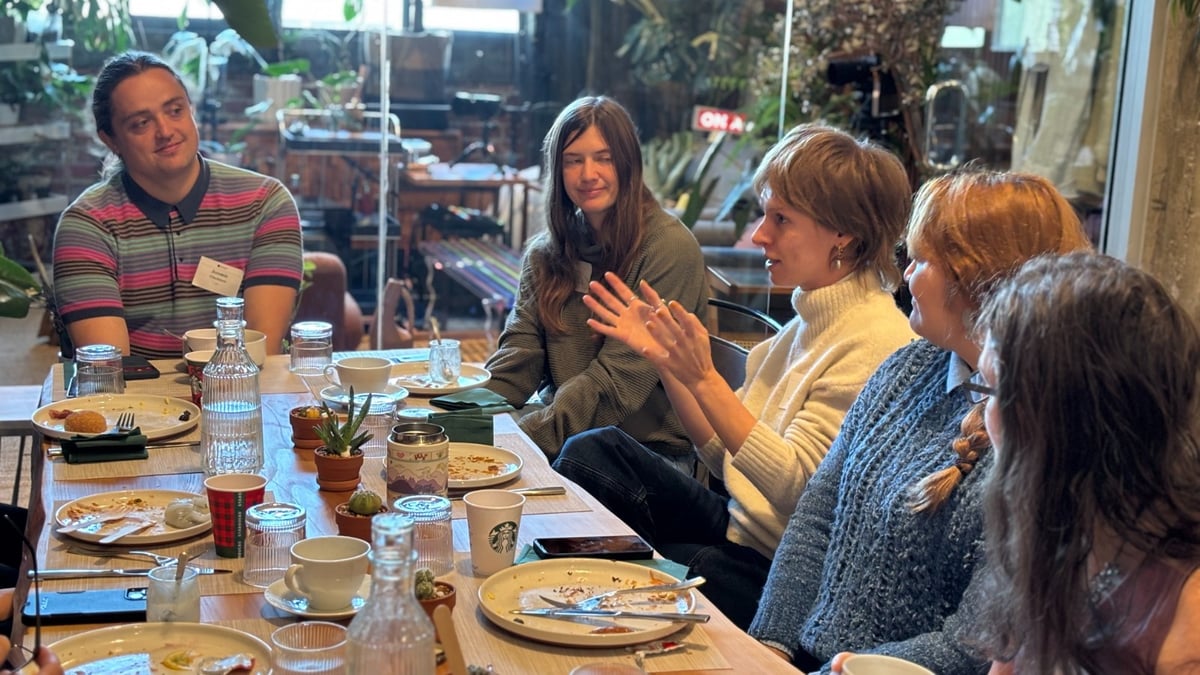
Every month, our Community Roundtable brings together a cross-section of practitioners who show up with openness, curiosity, and a willingness to compare notes. This session focused on our November theme, From Engagement to Intelligence, and the conversation made clear how much insight sits just beneath the surface of daily interactions with members.
Across experience levels and industries, the group shared moments when member behavior surprised them, challenged assumptions, or revealed something important about how people participate. Those small signals often hold the keys to stronger programs and clearer strategy, which is why we dedicated this roundtable to exploring them.
Two consistent themes surfaced: the need for human connection in an increasingly AI-driven landscape, and the importance of designing environments where people feel safe asking for what they actually need. When these two conditions are present, engagement becomes intelligence.
Why human connection still drives engagement
One of the most striking insights came from a participant working with AI-generated video products. Despite leading programs inside a highly technical product environment, they shared that their members consistently ask for deep human connection and prefer in-person interactions. They described how face-to-face moments create what their ambassadors call “micro moments of delight,” which matter more than any digital feature.
This sentiment resonated across the table. Another attendee who runs large professional development programs noted that in their community, gatherings often feel like reunions. Even at events with thousands of attendees, the moments that stick are the ones grounded in genuine connection. They described coaching their own team to lean into relationship building because it’s the one thing AI cannot replace.
Even as our tools become more automated, engagement still relies on trust, emotional resonance, and shared experiences. Community builders are uniquely positioned to create the conditions where those moments can happen.
When people have questions, but don’t feel permission to ask
The roundtable also surfaced a recurring challenge: people often have important questions but don’t feel comfortable asking them openly.
One participant who supports early-stage founders shared that many founders hesitate to ask direct questions in shared channels because they don’t want to appear unprepared or signal uncertainty to investors. Their discovery interviews revealed a backlog of unspoken needs, masked by the pressure to appear competent.
Others nodded knowingly. In many communities, the “I should already know this” dynamic prevents members from seeking support, even when the group exists to help them. Several participants talked about the role of trust, small-group intimacy, and peer modeling in breaking down this barrier.
One attendee emphasized that their most impactful community moments come from connecting members with peers who have already navigated similar challenges. Hearing how others figured things out makes it easier for new members to ask more honest questions.
This surfaced an important insight: engagement becomes intelligence only when people feel safe enough to show what they don’t know. Without trust, the real questions stay hidden.
What members say they want versus what they actually do
A recurring pattern across communities is the gap between stated preference and real behavior. Several participants shared nearly identical experiences: members ask for specific programming, but attendance or participation doesn’t follow.
One ambassador program leader described how they’ve learned to differentiate between feedback from long-term advocates and feedback from newer or less active members. To make sure signals are weighted appropriately, they’re now segmenting their end-of-year survey by participation level, allowing them to prioritize insights from members who consistently show up.
A program operator working with students shared a similar dynamic. Students often commit to events and then don’t attend, in part because flakiness has become normalized and resources are abundant. Their challenge is identifying what students will genuinely engage with, not just what they say they want.
The broader lesson: true community intelligence comes from behavior, not sentiment alone. Members reveal their priorities through action, and strong communities design programs by observing what people actually do.
The complexity of member-led events and shared ownership
The conversation eventually turned toward member-led programs, which many around the table described as both powerful and complicated.
One participant running global meetups explained how they respond when members request new event locations. Rather than taking on the work themselves, they invite the person making the request to lead the effort, offering resources, support, and scaffolding. This simple shift often reveals intent. Sometimes the member steps forward, but often the request reflects a wish rather than a willingness to lead. Either way, it builds goodwill because the community team shows openness while maintaining healthy boundaries.
Several attendees discussed the realities of quality control. Member-run events can vary widely, and while the benefits of distributing ownership are clear, teams still need guardrails to maintain safety, consistency, and brand integrity. Some rely on post-event feedback mechanisms to understand when to step in.
A long-time community leader offered a practical solution learned after years of trial and error: never rely on one member to host an event or lead a member-hosted event group. Their experience shows that a trio of leaders offers the most stability. If one person gets busy, the event can still move forward. A group of three increases resilience, spreads responsibility, and allows events to continue even when circumstances change.
This sparked a collective acknowledgement that member-led programs are always a balancing act. They carry risk, but when done well, they create pride, belonging, and powerful signals about what the community cares about.
How teams define success
The group closed the session by exploring how success varies based on a program’s goal. One participant asked how to assess whether an event with only a handful of attendees should be considered successful. The answer returned to intention. If the goal is lead generation, a small event with conversion may outperform a large one with none. If the goal is brand awareness, scale matters more.
The discussion reinforced a simple, grounded definition: A successful engagement is one that moves the intended outcome forward. But defining that outcome requires clarity, alignment, and honest reflection.
My thoughts
Hosting this roundtable reminded me why these intimate, cross-functional conversations matter. They reveal nuance. They surface the unspoken challenges we all navigate. And they highlight how much opportunity exists when we slow down enough to notice the small signals that actually shape our work.
The intelligence we gain from engagement isn’t always loud. It often appears in the quiet moments: a member’s hesitation to ask for help, an unexpected preference for human connection, or the difference between what someone requests and what they ultimately do. These are the signals that help us design programs people will return to.
Thank you to everyone who joined us in San Francisco. I hope the conversation gives you something useful to carry back into your own work.
1
Comments (0)
Popular

Dive in
Related
Blog
New Year, New Strategies: Community Roundtable in San Francisco
By Joshua Zerkel • Jan 23rd, 2026 • Views 58
Resource
The Community Intelligence Loop: How Engagement Becomes Insight and Action
By Joshua Zerkel • Nov 4th, 2025 • Views 51
Blog
From Shared Wins to New Ideas: Community Roundtable with Gradual in San Francisco
By Joshua Zerkel • Sep 24th, 2025 • Views 30
Resource
From Engagement to Intelligence: 3 Ways to Strengthen Your Community Strategy
By Joshua Zerkel • Nov 6th, 2025 • Views 49
Blog
New Year, New Strategies: Community Roundtable in San Francisco
By Joshua Zerkel • Jan 23rd, 2026 • Views 58
Blog
From Shared Wins to New Ideas: Community Roundtable with Gradual in San Francisco
By Joshua Zerkel • Sep 24th, 2025 • Views 30
Resource
From Engagement to Intelligence: 3 Ways to Strengthen Your Community Strategy
By Joshua Zerkel • Nov 6th, 2025 • Views 49
Resource
The Community Intelligence Loop: How Engagement Becomes Insight and Action
By Joshua Zerkel • Nov 4th, 2025 • Views 51