
Gradual Community

Why AI Can’t Replace Shared Customer Reality
Why AI Can’t Replace Shared Customer Reality
# AI
# GTM Strategy

How community insight prevents blind spots that AI alone can't see.

March 24, 2026
Joshua Zerkel
Joshua Zerkel
Why AI Can’t Replace Shared Customer Reality
AI continues to change how GTM teams plan and work. Forecasting models are more sophisticated. Lead scoring is more dynamic. Content and campaign decisions are increasingly informed by machine-driven insight. For many teams, these tools now sit at the center of GTM.
This shift has created real advantages. Teams can process more information, faster, with greater confidence. Planning cycles move quickly, and decisions feel grounded in data rather than instinct.
At the same time, many GTM leaders notice a new tension emerging. Certain questions keep resurfacing that the data does not fully answer. Why interest is building in one segment but not converting. Why a message performs well on paper but feels misaligned in practice. Why momentum seems present without showing up clearly in metrics.
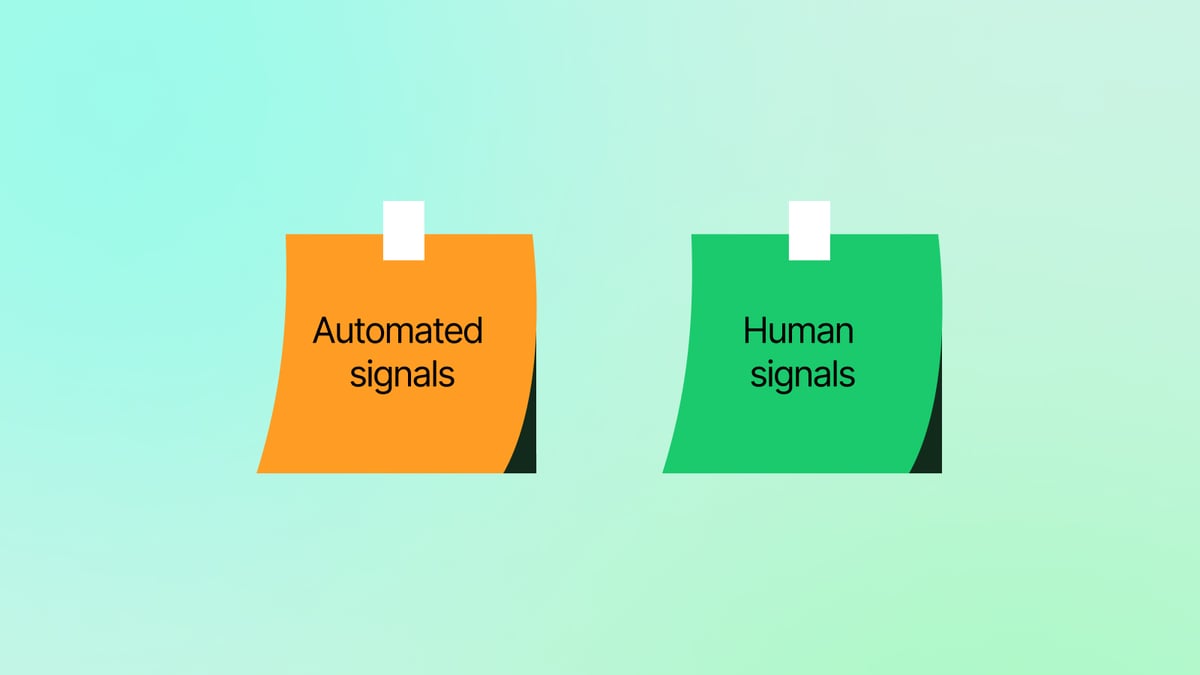
These gaps often trace back to signals that are human, contextual, and still forming.

Where AI strengthens GTM 

AI excels when inputs are structured and historical patterns are clear. It helps teams identify trends, model scenarios, and prioritize effort with speed and consistency.
It supports:
  • More accurate forecasting and pipeline modeling.
  • Faster iteration on messaging and campaigns.
  • Clearer visibility into what has worked before.
When decisions depend on scale and efficiency, AI adds real value. It can reduce guesswork and helps teams move forward with confidence once assumptions are established and validated.
For many GTM leaders, this has shifted planning and execution from intuition-driven to evidence-informed.

Where GTM starts to break without human context

Challenges tend to emerge when GTM relies too exclusively on these signals. AI can surface what is happening, but it often lacks visibility into why patterns are forming or how they might change.
Early-stage intent rarely shows up cleanly in structured data. Hesitation, confusion, and exploration often appear first in conversation. When these signals are missing from strategic inputs, teams can misread momentum or miss inflection points entirely.
Over time, this can lead to:
  • Campaigns that optimize for the wrong moment.
  • Messaging that feels disconnected from real concerns.
  • Overconfidence in plans that assume stability where uncertainty exists.
These issues rarely show up immediately. They surface later, when teams are executing confidently against assumptions that no longer hold.

How community surfaces signals most tools miss

Community spaces capture what people are trying to understand before they act. Questions asked in forums, themes raised during events, and peer-to-peer explanations reveal intent in its earliest form.
These signals provide context that automation alone cannot:
  • Why certain features or use cases generate confusion.
  • Where interest exists without urgency.
  • How language shifts as understanding deepens.
When GTM leaders incorporate this context, they gain a more nuanced view of readiness and risk. Community insight doesn’t replace AI-driven inputs. It helps interpret them more accurately.
This combination often leads to better sequencing, more relevant messaging, and fewer surprises later in the year.

The cost of ignoring human signals

When community insight is excluded, the cost is rarely obvious upfront. Plans still get approved. Execution still begins. Metrics still move.
The consequences show up later as friction:
  • GTM teams struggle to explain why performance diverges from projections.
  • Community teams feel reactive, pulled into firefighting rather than learning.
  • Leadership confidence erodes as plans require repeated adjustment.
In many cases, the issue isn’t poor execution. It’s incomplete planning inputs.

Planning with context, not just confidence

AI has become essential to modern GTM, but it works best when paired with human signals that provide context and meaning. Community offers visibility into intent, uncertainty, and language at moments when those signals are still forming.
Balancing AI with community insight tends to be more resilient. It anticipates change rather than reacting to it.

Key takeaways

  • AI strengthens GTM when signals are structured and mature.
  • Community surfaces early, human signals AI sometimes misses.
  • Combining both reduces blind spots and improves results.
Comments (0)
Popular
avatar

Table Of Contents
Dive in

Related

Resource
Playbook: Building a Reddit Engagement System That Creates Shared Customer Context
By Jeremie Gluckman • Mar 12th, 2026 Views 28
Resource
Playbook: Building a Repeat Buyer Program From Your Customer Database
By Irwin Hipsman • Mar 26th, 2026 Views 8
Resource
Customer Education vs. Lifecycle Marketing: Why They Require Different Skills
By Joshua Zerkel • Dec 4th, 2025 Views 15
Resource
Playbook: Turning Customer Context Into Repeat Revenue
By Irwin Hipsman • Mar 31st, 2026 Views 6
Resource
Playbook: Building a Reddit Engagement System That Creates Shared Customer Context
By Jeremie Gluckman • Mar 12th, 2026 Views 28
Resource
Customer Education vs. Lifecycle Marketing: Why They Require Different Skills
By Joshua Zerkel • Dec 4th, 2025 Views 15
Resource
Playbook: Turning Customer Context Into Repeat Revenue
By Irwin Hipsman • Mar 31st, 2026 Views 6
Resource
Playbook: Building a Repeat Buyer Program From Your Customer Database
By Irwin Hipsman • Mar 26th, 2026 Views 8
© 2026 Gradual Community
Privacy Policy