
Gradual Community
+00:00 GMT

Webinar Recap: From Connection to Impact: Executive Insights with Brian Oblinger
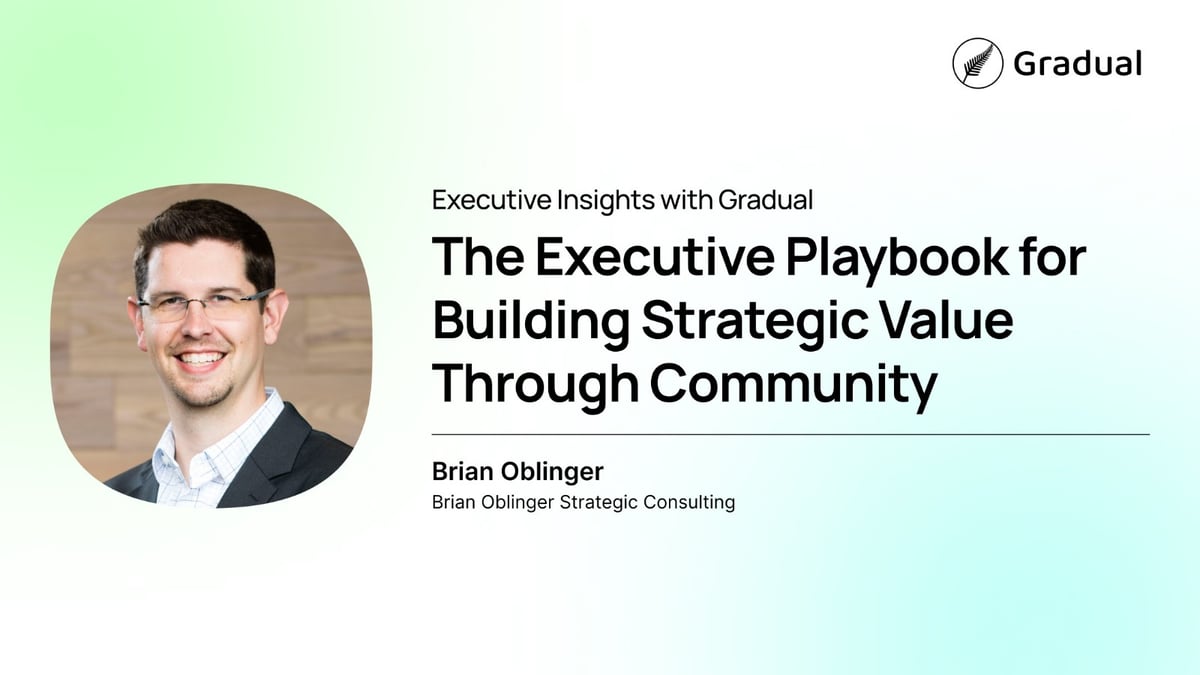
Webinar Recap: From Connection to Impact: Executive Insights with Brian Oblinger
# Theme: Leadership & Executive Perspectives
# Theme: Community Building & DevRel
# Theme: GTM Strategy & Trends
# Theme: Emerging Tech
# Format: Event Recaps
# Challenge: Cross-Functional Alignment

How executives can build measurable business value through community

October 31, 2025
Brian Oblinger
Brian Oblinger
Joshua Zerkel
Joshua Zerkel
Webinar Recap: From Connection to Impact: Executive Insights with Brian Oblinger
In our latest Executive Insights with Gradual session, I had the opportunity to host Brian Oblinger, an advisor to brands including Airbnb, Greenhouse, Salesforce, and HubSpot. The conversation centered on a question every leader should be asking: how can executives move beyond engagement and make community a driver of measurable business impact?
Community has evolved quickly. What began as a support or marketing function has become an essential part of go-to-market strategy. Brian brought a practical and seasoned perspective to what this shift means for executives today and where it is headed next.
“Community is now part of how companies learn, build, and grow,” Brian said. “When leaders understand that, it changes the conversation from participation to purpose.”

Community as a strategic asset

A central theme of our discussion was how executives can reframe community from a set of activities to a core business system. The strongest companies, Brian said, see community not as a department but as infrastructure.
“Executives need to see community as connective tissue. It’s what ties together customer experience, product insight, and brand trust.”
That shift begins with executive visibility. When senior leaders recognize the value of community data and the relationships it represents, they can use it to shape priorities across teams.
What this looks like in practice:
  • Including community metrics in executive dashboards alongside retention and sales data
  • Reviewing key community signals in leadership meetings
  • Treating community activity as a source of strategic input, not only engagement
“When executives start looking at community metrics next to core business data,” Brian noted, “they realize how much potential they’ve been missing.”

Cross-functional alignment in action

We explored how cross-functional collaboration makes community stronger. Brian shared examples of companies where Product, Customer Success, and Marketing all engage with community insights to guide decisions.
One product team he worked with began integrating customer discussions from the community directly into its roadmap process. Instead of relying only on internal priorities, they spotted trends in what customers were requesting and used that information to validate new investments.
“It’s not about more tools or reports,” Brian said. “It’s about teams sitting down together, looking at the same data, and agreeing on what matters most.”
Cross-functional collaboration delivers:
  • Faster feedback loops between teams
  • Shared understanding of customer needs
  • Better alignment around what drives retention and expansion
This type of collaboration benefits customers and strengthens internal relationships across the organization.

Making community measurable

Executives often ask how to prove the value of community. Brian explained that the key is to connect community activity to existing business metrics rather than creating a separate scorecard.
He outlined a simple approach:
  1. Identify the key outcomes your company already tracks, such as retention, expansion, or adoption.
  1. Map community behaviors that correlate with those outcomes.
  1. Track how those behaviors influence results over time.
For example, if customers who participate in a product community show higher renewal rates or faster onboarding, that’s measurable business value.
“Keep it simple and connected,” Brian advised. “The moment you treat community data as something separate, you lose credibility with executives.”

Preparing for what’s next: community and AI

Looking ahead, Brian shared how AI is transforming the way communities operate and the insights they can generate. AI can help surface patterns and signals that humans might miss, turning conversations into actionable intelligence for teams across the business.
At the same time, he encouraged leaders to be thoughtful about how they introduce AI.
“AI should enhance human connection, not replace it,” he said. “The best use cases are the ones that make community professionals more effective, not less visible.”
For executives, this means investing in tools that strengthen human insight while using automation to improve scale and efficiency. The leaders who strike that balance will stay ahead as community strategy continues to evolve.

My reflection

Hosting this session reinforced something I’ve seen across every strong community program: leadership buy-in changes everything. When executives view community as a strategic system rather than a set of disconnected activities, it becomes a driver of both growth and alignment.
Brian’s perspective also underscored that impact doesn’t come from scale alone. It comes from clarity—knowing what community is meant to achieve and creating the right structure and space for teams to deliver on that purpose.
At Gradual, we see this same mindset shaping how companies approach community-led growth. When strategy, structure, and insight come together, community becomes more than engagement. It becomes intelligence.
Comments (0)
Popular
avatar

Dive in

Related

Blog
Webinar Recap: From Activity to Impact: Executive Insights with Bill Johnston
By Bill Johnston • Nov 13th, 2025 Views 21
© 2025 Gradual Community
Privacy Policy